Spanish lessons online: Finding Quality Instruction That Fits Your Life
You've decided to learn Spanish, and you're considering online lessons. Smart choice. Spanish lessons online offer flexibility, variety, and often better value than traditional in-person classes. But with so many options available—from group classes to private tutoring, from free platforms to premium subscriptions—how do you find quality instruction that actually works?
The truth is that online Spanish lessons have evolved dramatically. What once meant grainy video calls and clunky interfaces now includes sophisticated platforms with interactive features, native-speaking teachers from around the world, and learning experiences that can rival or even exceed traditional classrooms.
This guide will help you understand the landscape of Spanish lessons online, evaluate different options, and choose the approach that matches your learning style, schedule, and goals. Whether you're a complete beginner or looking to advance your existing skills, there's an online Spanish lesson format designed for you.
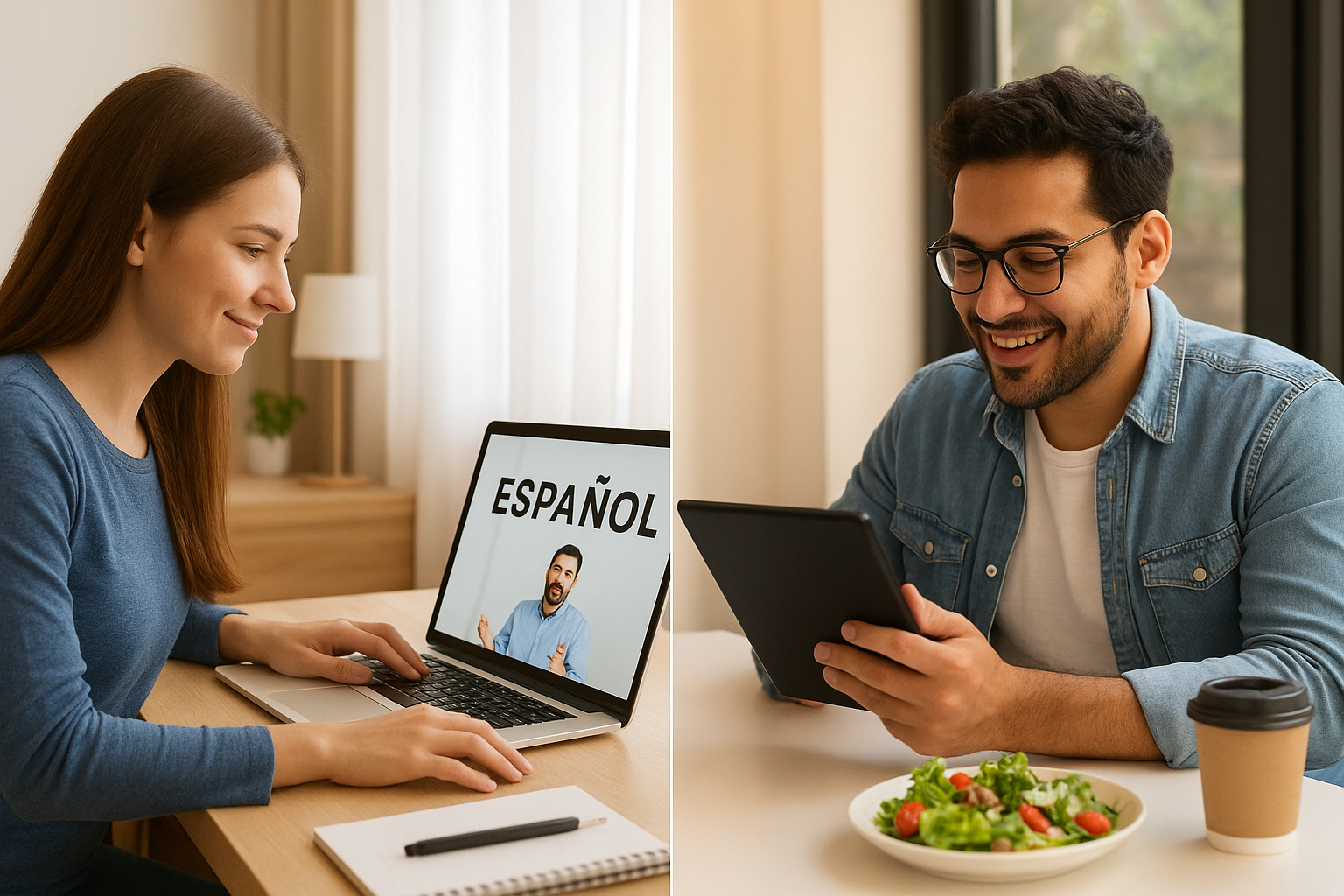
Why Spanish Lessons Online Work So Well
Online Spanish lessons offer advantages that traditional in-person classes simply can't match:
Flexibility: Learn when it fits your schedule, whether that's early morning before work, during lunch breaks, or late evening after the kids are asleep. No commuting time means you can fit Spanish into even the busiest schedule.
Access to Native Speakers: Connect with teachers from Spain, Mexico, Argentina, Colombia, and other Spanish-speaking countries. This exposure to different accents and regional variations prepares you for real-world Spanish better than learning from a single local teacher.
Personalization: Online platforms often allow you to choose teachers who specialize in your interests—business Spanish, travel Spanish, exam preparation, or conversation practice. You're not stuck with whoever happens to teach at your local language school.
Cost Effectiveness: Online lessons typically cost less than in-person instruction because teachers have lower overhead costs. You'll find quality instruction at various price points, making Spanish accessible regardless of budget.
Comfort and Confidence: Learning from home can reduce anxiety, especially for beginners who feel self-conscious speaking a new language. Your own environment provides a comfortable space to make mistakes and learn.
Technology Advantages: Screen sharing, interactive whiteboards, instant chat for spelling clarification, and recording capabilities (when permitted) enhance learning in ways traditional classrooms can't replicate.
Types of Spanish Lessons Online
Spanish lessons online come in several formats, each with distinct advantages:
Private One-on-One Lessons

Individual lessons with a dedicated teacher who focuses entirely on you for the duration of your session.
Strengths: Completely customized to your level and goals, full attention from the teacher, flexible pacing—speed up or slow down as needed, opportunity to ask unlimited questions, comfortable environment for making mistakes.
Best for: Learners who want personalized attention, those with specific goals like business Spanish or exam preparation, students who prefer not to compete for speaking time, and anyone who learns better without peer comparison.
Typical cost: $10-40 per hour, depending on teacher experience and qualifications.
Group Classes

Small groups of students (typically 3-8) learning together with a teacher leading structured lessons.
Strengths: Social interaction and peer learning, more affordable than private lessons, scheduled classes create accountability, opportunity to practice with fellow learners, exposure to different questions and perspectives.
Best for: Budget-conscious learners, social people who enjoy group dynamics, those who benefit from structured schedules, students who like learning alongside peers at similar levels.
Typical cost: $8-25 per class, often sold in packages.
Self-Paced Online Courses
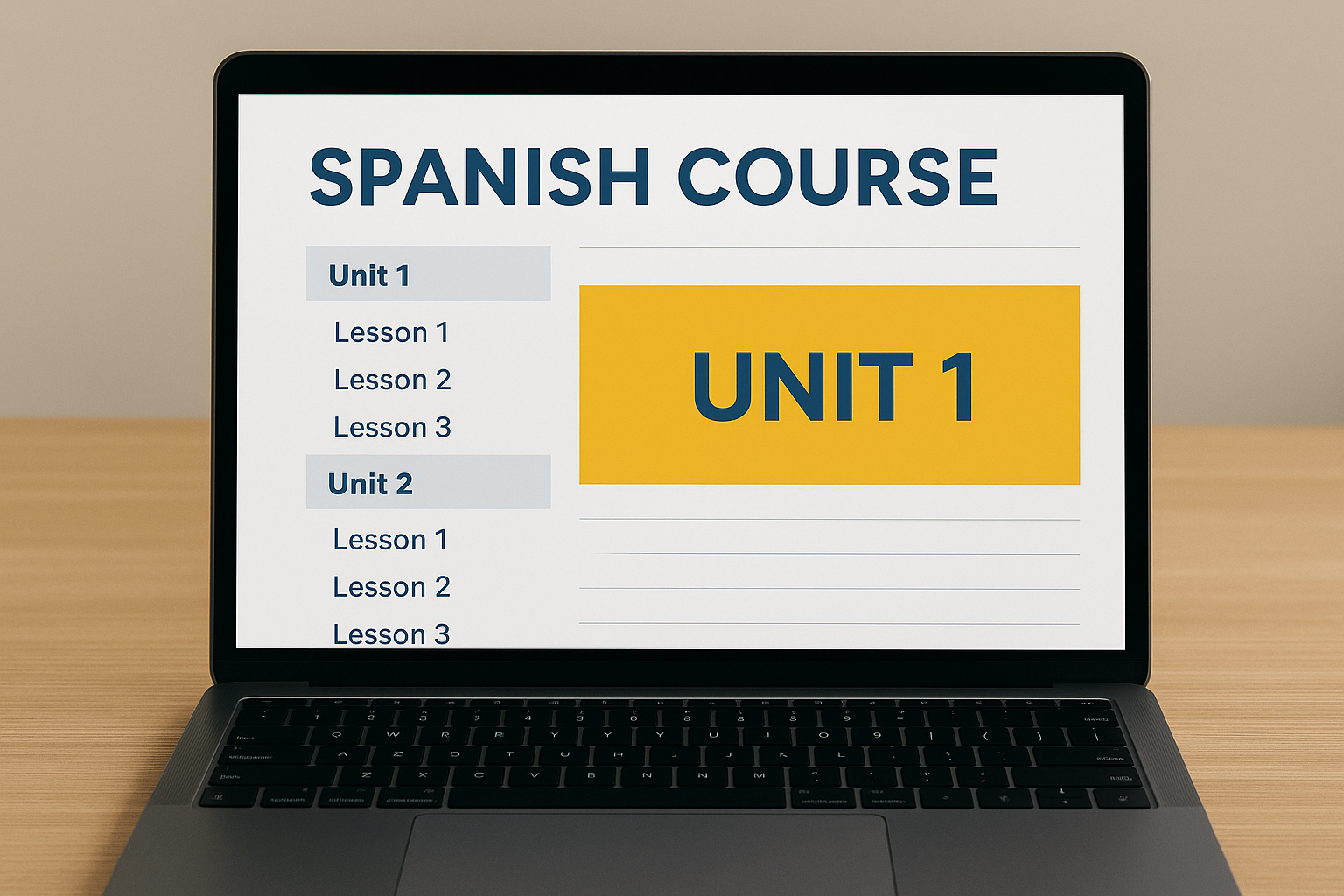
Pre-recorded video lessons you complete at your own pace, usually with exercises and quizzes for practice.
Strengths: Complete flexibility—learn anytime, pause and replay difficult concepts, often more affordable than live lessons, comprehensive structured curriculum, work through material as quickly or slowly as needed.
Best for: Highly self-motivated learners, those with unpredictable schedules, students who like reviewing material multiple times, people learning primarily for reading and listening comprehension.
Typical cost: $10-50 monthly subscriptions or $100-300 one-time purchases.
Hybrid Approaches
Combinations of self-paced content with scheduled live sessions for practice and feedback.
Strengths: Balance of flexibility and interaction, structured learning with human support, often the most comprehensive option, practice opportunities without constant scheduling.
Best for: Learners wanting both structure and flexibility, those who benefit from self-study but need regular interaction, students preparing for specific milestones or exams.
Typical cost: Varies widely, typically $30-100 monthly.
Finding Quality Spanish Lessons Online
Not all online Spanish lessons are created equal. Here's how to identify quality instruction:
Teacher Qualifications: Look for native speakers or highly proficient non-natives with teaching credentials. Experience teaching specifically online matters—it requires different skills than in-person instruction. Check if teachers have formal training in language teaching methodologies.
Structured Curriculum: Quality lessons follow a logical progression that builds skills systematically. Random conversation without structure might be enjoyable but won't necessarily develop comprehensive language skills.
Interactive Elements: Effective online lessons actively engage you through speaking practice, exercises, games, and activities—not just passive watching or listening. Look for platforms that require your participation.
Speaking Opportunities: Language learning requires production, not just comprehension. Ensure you'll have regular opportunities to speak, whether in one-on-one sessions, small group practice, or conversation clubs.
Clear Level Progression: Good programs assess your starting level and provide clear paths for advancement. You should understand where you are and what comes next.
Feedback Mechanisms: Whether through teacher corrections, automated quizzes, or peer review, you need ways to know when you're making mistakes and how to improve.
Cultural Content: Spanish isn't just vocabulary and grammar—it's culture, customs, and context. Quality lessons incorporate cultural learning alongside language instruction.
Platforms Offering Spanish Lessons Online
Several platforms have emerged as leaders in online Spanish instruction:
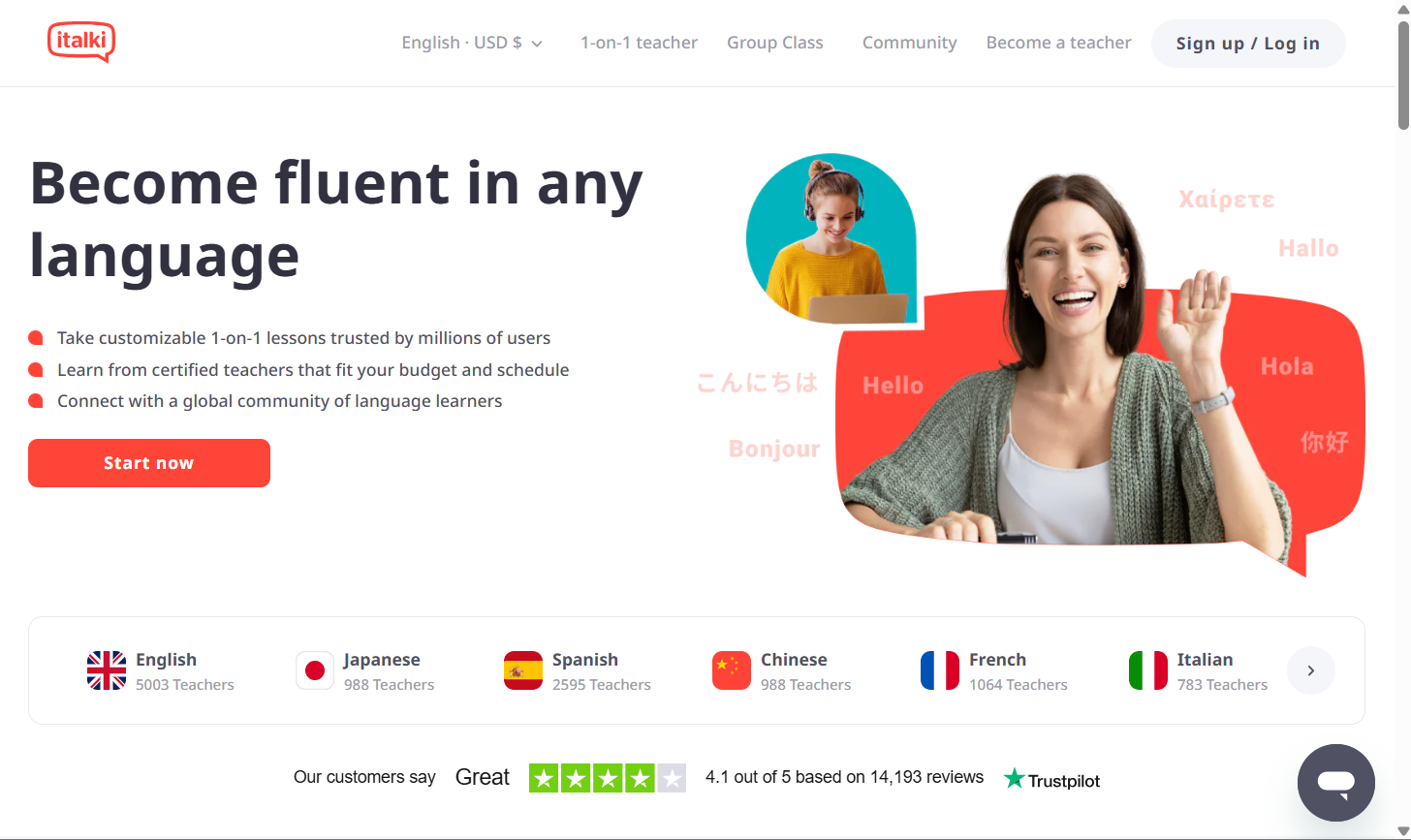
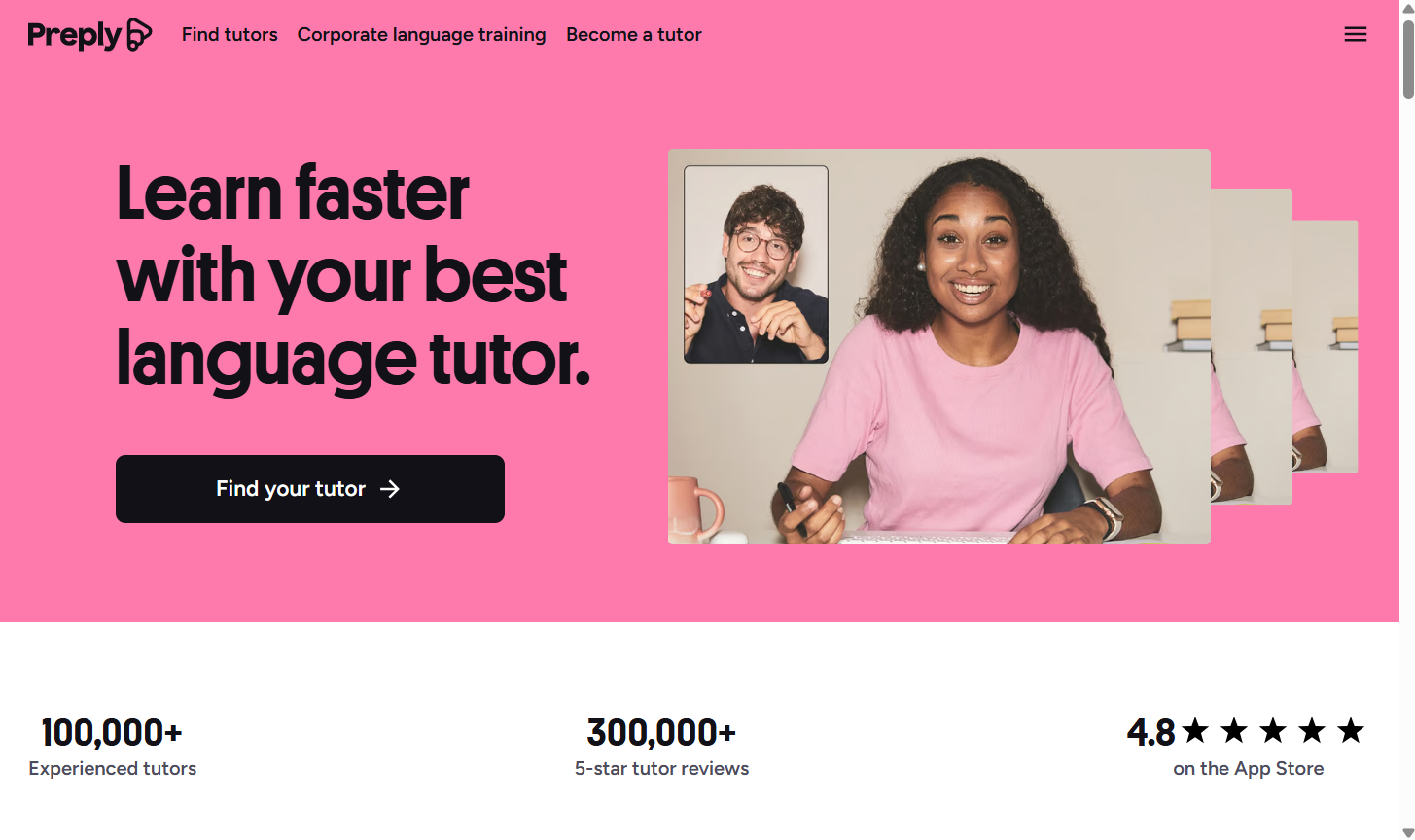
italki and Preply
These marketplace platforms connect you with individual teachers for private lessons. You browse teacher profiles, watch introduction videos, read reviews, and book trial lessons before committing. Teachers set their own rates and schedules.
Strengths: Huge variety of teachers, flexible scheduling, competitive pricing, ability to try different teachers until you find the right fit.
Best for: Learners who want private instruction, those comfortable evaluating and choosing teachers independently, and students seeking specific expertise.
 |
 |
Baselang
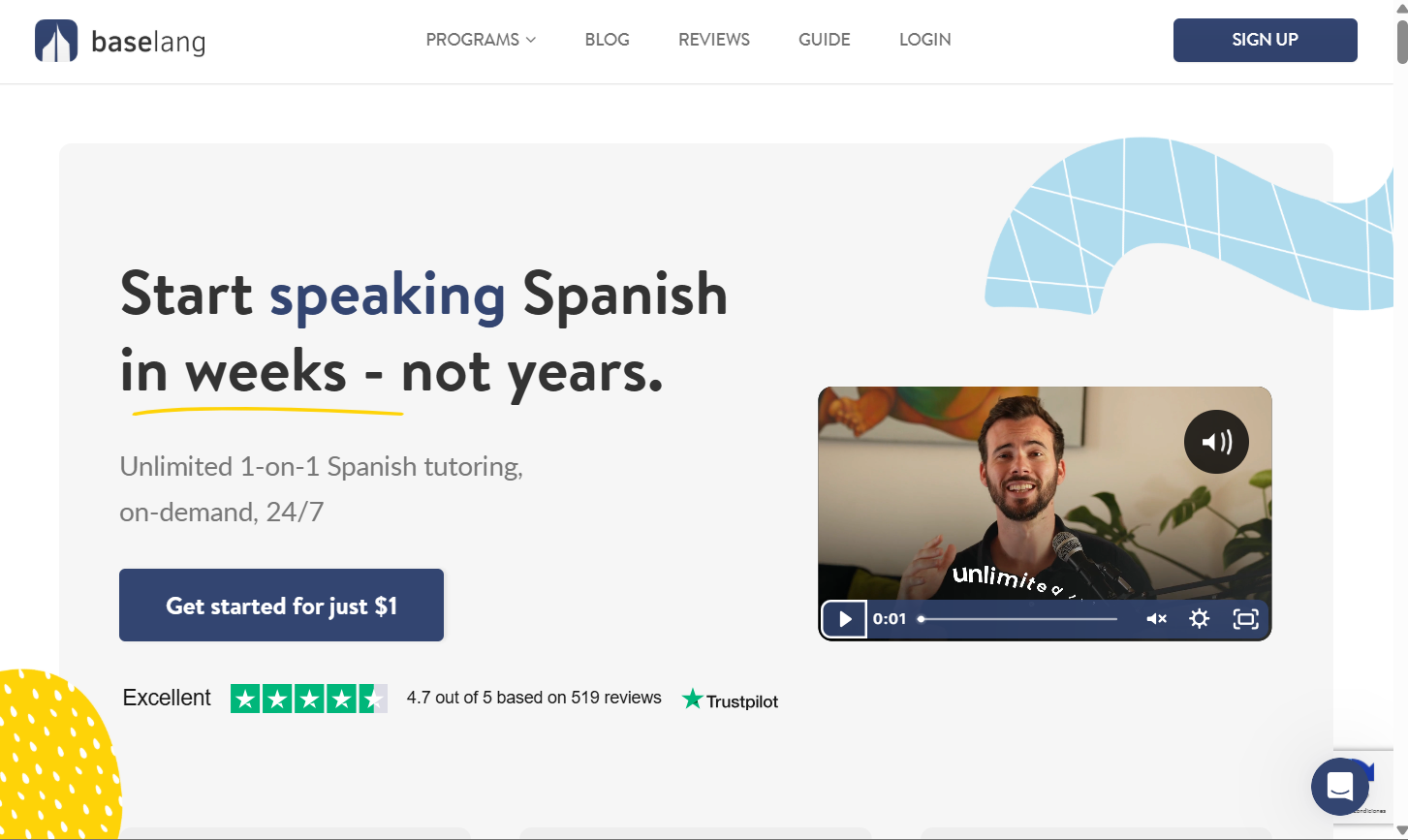
Offers unlimited one-on-one lessons with professional teachers for a flat monthly fee. Teachers are primarily from Latin America, and lessons use the platform's curriculum or can be customized.
Strengths: Cost-effective for intensive learners, consistent methodology across teachers, professional instruction at predictable pricing.
Best for: Dedicated learners who will use lessons frequently, those wanting intensive immersion, and students who thrive with daily practice.
Lingoda
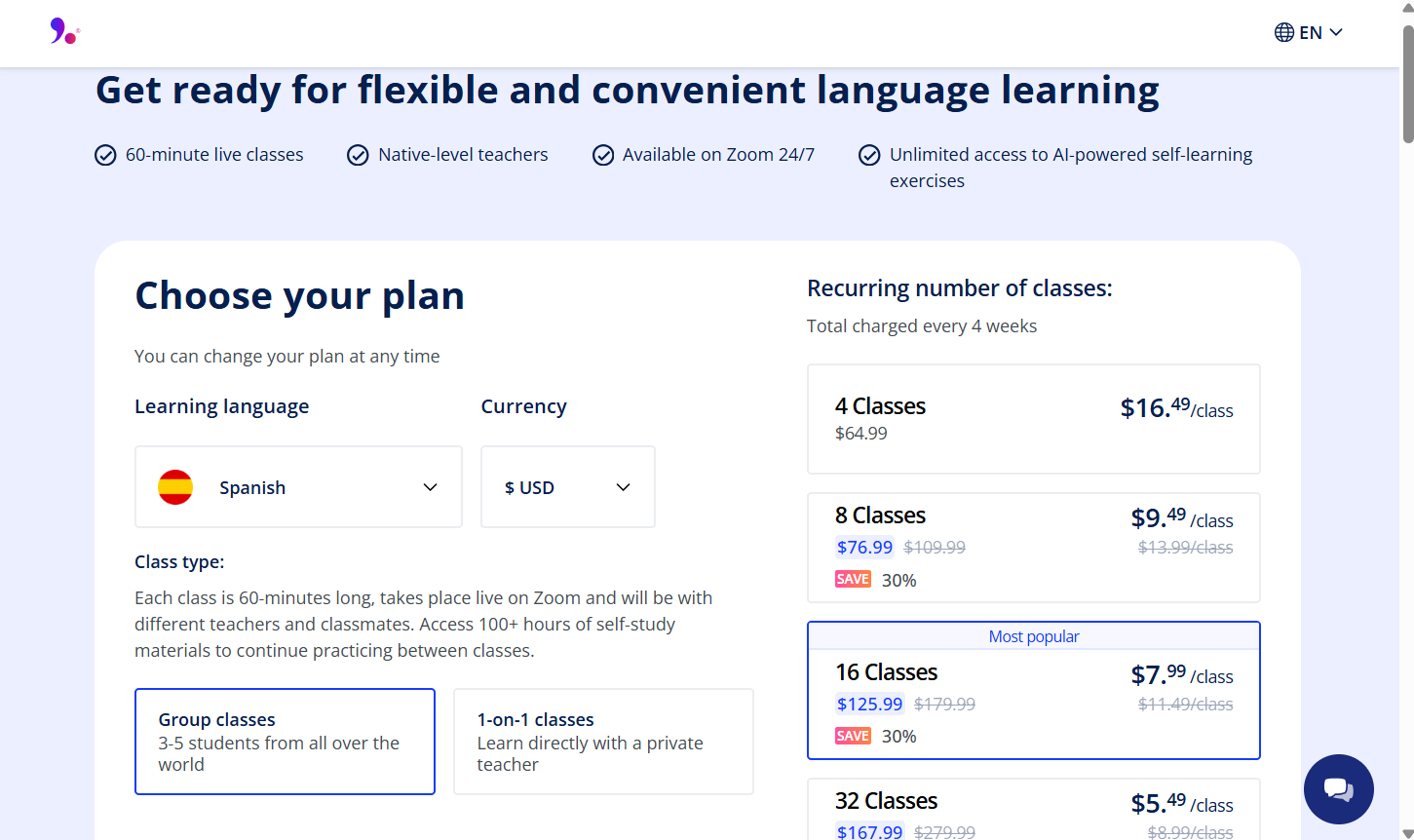
Provides structured group classes and private lessons with certified teachers following CEFR standards. Classes run 24/7, and you can book sessions that fit your schedule.
Strengths: Professional certified teachers, structured curriculum aligned with international standards, social learning environment, and clear progression path.
Best for: Goal-oriented learners working toward proficiency levels, those who enjoy small group dynamics, and students who appreciate structure.
Verbling
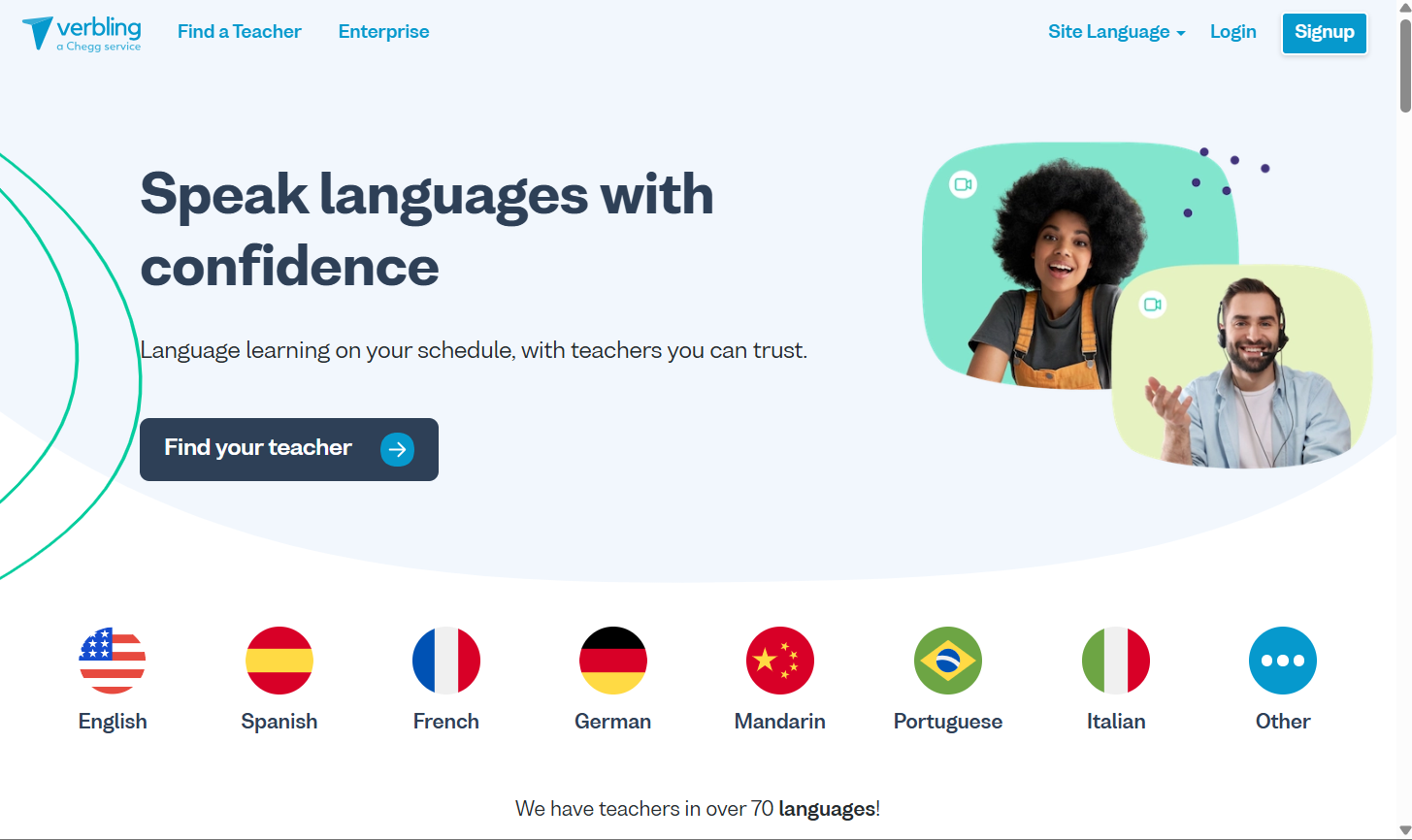
Similar to italki but with a more curated selection of verified teachers. All instructors are vetted and must demonstrate teaching experience.
Strengths: Quality-vetted teachers, user-friendly platform, flexible scheduling, free conversation exchange community.
Best for: Learners who want the flexibility of marketplace platforms with some quality assurance, and those interested in language exchange alongside lessons.
Rocket Spanish
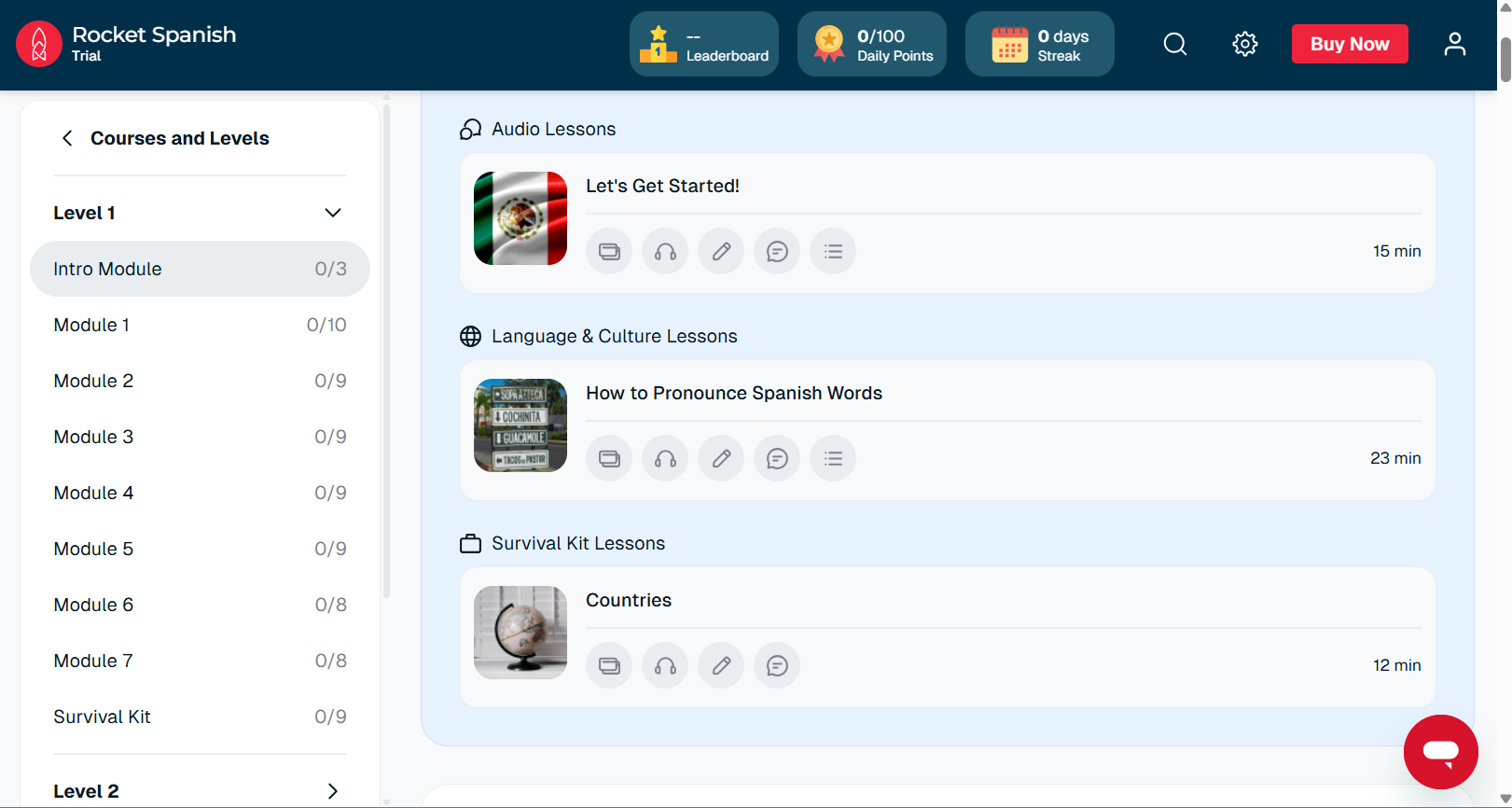
Self-paced comprehensive course with audio lessons, interactive exercises, and cultural content. No live teachers, but extensive structured content.
Strengths: Thorough coverage from beginner to advanced, lifetime access, self-paced learning, and a one-time purchase option.
Best for: Independent learners, those preferring self-paced study, and students who want a comprehensive curriculum without live instruction.
For adult learners specifically looking for structured online programs, explore our guide to online Spanish classes for adults, which covers age-appropriate learning environments and content.
Private Lessons vs. Group Classes: Which Online Format?
This is one of the most important decisions when choosing Spanish lessons online.
Choose Private Lessons If You:
- Have specific goals that require customized attention
- Prefer learning at your own pace without group dynamics
- Feel self-conscious speaking in groups
- Have an irregular schedule that makes consistent group attendance difficult
- Want intensive focus on particular skills like pronunciation or business vocabulary
- Learn better one-on-one than in social settings
- Have budget for individual instruction
Choose Group Classes If You:
- Enjoy social interaction and learning from peers
- Want more affordable options than private lessons
- Benefit from structured schedules and accountability
- Find motivation in friendly competition
- Appreciate hearing different questions and perspectives
- Prefer a predictable routine with regular class times
- Enjoy practicing with other learners
Many successful students use both private lessons for focused work on challenges, group classes for regular practice, and social motivation. For a deeper dive into structured group learning environments, see our guide on online classes to learn Spanish.
How to Choose the Right Teacher for Spanish Lessons Online
Your teacher dramatically impacts your learning experience. Here's how to select wisely:
Watch Introduction Videos: Most platforms let teachers record introduction videos. Watch several to get a sense of teaching style, personality, and how comfortable you feel with them.
Check Qualifications: Look for teaching credentials, relevant experience, and native or near-native proficiency. Teaching experience matters more than degrees—someone with years of successful online teaching often outperforms a recent graduate with a degree but no practical experience.
Read Reviews Carefully: Don't just look at star ratings—read actual comments from students. Look for patterns in feedback. Do students mention specific improvements? Do they continue with the teacher long-term?
Consider Accent Preferences: If you're learning Spanish for use in a specific region, consider finding a teacher from that area. However, exposure to different accents ultimately benefits your comprehension.
Book Trial Lessons: Most teachers offer discounted first lessons. Book trials with 2-3 teachers before committing. You'll immediately know if there's good chemistry and if their teaching style suits you.
Evaluate Teaching Method: During trial lessons, notice if the teacher adapts to your level, provides corrections without discouragement, balances speaking time fairly, and keeps you engaged. Teaching is a skill separate from knowing Spanish.
Trust Your Instincts: If a teacher feels right—you look forward to lessons, you're making progress, you feel comfortable making mistakes—that's your match. If something feels off, keep looking.
Making Spanish Lessons Online Effective
Getting the most from Spanish lessons online requires more than just showing up:
Create a Dedicated Learning Space: While online lessons offer location flexibility, having a consistent, quiet space with good lighting and minimal distractions helps you focus and signals to your brain that it's learning time.
Test Technology in Advance: Check your internet connection, camera, and microphone before lessons. Technical difficulties eat into valuable learning time. Have a backup plan if your primary internet fails.
Prepare for Each Lesson: Spend 5-10 minutes reviewing previous material before lessons. Arrive with specific questions or topics you'd like to cover. Active preparation makes lessons far more productive.
Take Notes During Sessions: Write down new vocabulary, grammar points, and corrections. Typing during video calls works, but handwriting often improves retention. Review notes between lessons.
Practice Between Lessons: Spanish lessons online provide instruction and practice, but you need additional exposure. Watch Spanish content, listen to podcasts, practice with apps, or join language exchanges between formal lessons.
Speak from Day One: Don't wait until you "know enough" to start speaking. Use every opportunity in lessons to practice speaking, even if you make mistakes. That's precisely how you improve.
Request Corrections: Tell your teacher you want to be corrected. Some teachers avoid excessive correction to maintain student confidence, but you need feedback to improve. Find the balance that works for you.
Be Consistent: One hour weekly produces far less progress than four 15-minute sessions. If scheduling permits, shorter, more frequent lessons often yield better results than infrequent, longer ones.
Integrating Spanish Lessons Online with Self-Study
Spanish lessons online work best as part of a comprehensive learning strategy, not as your only tool.
Before Lessons: Review previous material, prepare questions about confusing topics, preview upcoming lesson content if available, and practice pronunciation of difficult words.
During Lessons: Actively participate—speak as much as possible, ask for clarification immediately, take strategic notes, request examples when concepts are unclear.
After Lessons: Review notes within 24 hours, practice what you learned through exercises or apps, apply new vocabulary in writing or speaking, and identify areas needing extra work.
Between Lessons: Maintain daily Spanish exposure through apps like those covered in our best app to learn Spanish guide, consume Spanish media, practice speaking with language partners, read at your level, write regularly.
Balance Input and Output: Lessons provide valuable output practice (speaking and writing), but you also need massive input (listening and reading) to develop comprehensive skills. Explore different ways to learn Spanish to round out your approach.
The most successful online students treat lessons as coaching sessions that guide and accelerate their broader learning efforts, not as the entirety of their Spanish practice.
Cost Considerations for Spanish Lessons Online
Spanish lessons online span a wide price range. Understanding what affects cost helps you make informed decisions:
What Affects Pricing:
- Teacher qualifications: Professional teachers with degrees and certifications typically charge more than community tutors
- Lesson format: Private lessons cost more than group classes, live instruction costs more than self-paced courses
- Platform fees: Some platforms take larger commissions, which teachers factor into rates
- Teacher location: Teachers in countries with lower costs of living often charge less, though this doesn't necessarily reflect quality
- Specialization: Business Spanish or exam preparation specialists may charge premium rates
- Experience: Established teachers with proven track records can command higher fees
Budget-Friendly Options:
- Start with group classes if private lessons exceed your budget
- Book lessons with experienced community tutors rather than professional teachers
- Choose teachers from Latin America, where rates tend to be lower
- Buy lesson packages, which often offer discounts over single sessions
- Combine affordable group classes with occasional private lessons for specific challenges
When to Invest More:
- If you have urgent deadlines like upcoming travel or exams
- When you need specialized instruction, like business or medical Spanish
- If you've struggled with other methods and need expert personalized help
- When time is more valuable than money, and you want to accelerate progress
Remember that the best way to learn Spanish isn't always the most expensive option—it's the one you'll use consistently that matches your learning style.
Common Concerns About Spanish Lessons Online
"Will online lessons really work as well as in-person?"
Research shows online language instruction can be equally or more effective than in-person when done well. The key is choosing quality teachers and platforms. Many students actually prefer online lessons because they're less intimidating than face-to-face instruction.
"I'm not tech-savvy. Will I struggle with online lessons?"
Most platforms are designed for simplicity. If you can make a video call, you can take online lessons. Teachers are usually patient with technical issues, and most platforms offer technical support.
"How do I know if a teacher is legitimate?"
Use established platforms with vetting processes and review systems. Read multiple reviews, watch introduction videos, and take advantage of trial lessons. Trust builds gradually—you're not committing long-term immediately.
"What if I have a bad internet connection?"
Most lessons work fine with moderate internet speeds. If you live in an area with unreliable connections, consider self-paced courses you can download, or schedule lessons during times when your internet is most reliable. Many platforms also offer apps that optimize for lower bandwidth.
"Can I really learn to speak Spanish online, or will I just understand it?"
You absolutely can develop speaking skills online if you choose formats that emphasize speaking practice. Private lessons and small group classes provide ample opportunities to speak. The key is actively speaking during lessons, not just listening.
"How do I stay motivated with online lessons?"
Choose teachers who engage and challenge you. Set specific goals and track progress. Join online communities of Spanish learners. Schedule lessons at regular times to create a routine.
Combining Spanish Lessons Online with Immersion
While Spanish lessons online provide structure and guidance, immersion accelerates learning dramatically:
Daily Immersion Activities:
- Change your phone and social media settings to Spanish
- Watch Spanish shows and movies—start with Spanish subtitles, progress to no subtitles. Check our recommendations for shows to learn Spanish.
- Listen to Spanish music and podcasts during commutes and chores
- Read Spanish news sites, blogs, or books at your level
- Follow Spanish-speaking social media accounts in areas you're interested in
- Join online Spanish conversation groups or language exchanges
Using Online Lessons to Support Immersion:
Bring questions from your immersion activities to lessons: "I heard this phrase in a show—what does it mean?" Use lessons to clarify grammar patterns you're noticing in content. Practice pronunciation of words you're encountering frequently. Ask about cultural references you don't understand.
This combination—structured lessons providing grammar and feedback, immersion providing massive exposure and cultural context—produces the fastest progress. If you're interested in the science behind this approach, learn more about comprehensible input and its role in language acquisition.
Getting Started with Spanish Lessons Online Today
Ready to begin? Here's your action plan:
Step 1: Clarify Your Goals
What do you want to achieve? Conversational Spanish for travel? Professional proficiency for work? Understanding Spanish media? Your goals determine which lesson format suits you best.
Step 2: Assess Your Schedule and Budget
How much time can you realistically dedicate weekly? What can you comfortably afford? Be honest—sustainable commitment matters more than ambitious plans you can't maintain.
Step 3: Choose Your Format
Based on your learning style, goals, schedule, and budget, decide between private lessons, group classes, self-paced courses, or a combination.
Step 4: Select a Platform
Research 2-3 platforms offering your preferred format. Read reviews, compare pricing, check teacher selection, and evaluate interface usability.
Step 5: Book Trial Lessons
Don't commit immediately. Try 2-3 teachers or classes before deciding. The right match makes all the difference in enjoyment and progress.
Step 6: Create Your Learning System
Combine lessons with self-study using apps, immersion through media, and practice with language partners. Lessons are most effective as part of a comprehensive approach. Explore resources to learn Spanish to build your complete system.
Step 7: Commit for at Least 3 Months
Give your chosen approach enough time to show results. Language learning requires patience—you won't be fluent in weeks, but you'll see meaningful progress in months.
The Reality of Progress with Spanish Lessons Online
Let's be realistic about timelines and expectations:
After 1 Month of consistent lessons (2-3 per week) plus daily self-study: Basic greetings and introductions, simple present tense, essential vocabulary for everyday topics, understanding of very basic conversations, confidence to try speaking despite mistakes.
After 3 Months: Comfortable with common present tense verbs, expanded vocabulary around familiar topics, ability to handle simple conversations about routine matters, improved listening comprehension of clear Spanish, basic reading of simple texts, and reduced anxiety about speaking.
After 6 Months: Multiple verb tenses in use, conversations about a wider range of topics, ability to express opinions and preferences, understanding of main ideas in most everyday speech, comfortable reading of adapted materials, noticeably more fluent speech.
After 1 Year: Solid intermediate skills, comfortable with most common grammar structures, ability to discuss abstract topics with some effort, understanding of most Spanish media with context, confident reading of authentic materials, natural conversational flow in familiar contexts.
These timelines assume consistent effort—regular lessons plus daily self-study. Sporadic practice produces slower progress. Intensive practice accelerates it. Understanding realistic timeframes prevents discouragement and helps you appreciate steady improvement.
If you're wondering whether you can teach yourself Spanish, the answer is yes—but online lessons provide valuable structure, feedback, and speaking practice that self-study alone can't fully replicate.
Final Thoughts on Spanish Lessons Online
Spanish lessons online have democratized language learning, providing access to quality instruction regardless of location or budget. Whether you choose private tutoring, group classes, self-paced courses, or a combination, the right online lessons can accelerate your Spanish journey significantly.
The key to success isn't finding the perfect platform or the best teacher—it's choosing good-enough options that fit your life and committing to consistent practice. A mediocre program you use regularly beats a perfect program you abandon after two weeks.
Your Spanish learning journey is unique. What works brilliantly for a colleague might frustrate you, and vice versa. Give yourself permission to experiment, adjust your approach when something isn't working, and trust that with persistence and the right support, you will make real progress.
The best time to start Spanish lessons online was months ago. The second best time is today. Choose a platform, book a trial lesson, and take that first step. Your future Spanish-speaking self will thank you.
¡Buena suerte y disfruta el viaje! (Good luck and enjoy the journey!)
Stay inspired on your Spanish journey with occasional updates, new articles, and helpful resources.