- Home
- Online Spanish Classes for Adults
Online Spanish classes for adults: Where to Find Quality Instruction
You've decided that online Spanish classes make sense for your schedule and goals. Now comes the next question: where do you actually find quality online Spanish classes for adults? With dozens of platforms and thousands of teachers available, how do you choose?
This guide breaks down the major options—from structured online schools to marketplaces where you can hire individual teachers—so you can make an informed decision based on your needs, budget, and learning style.
Understanding Your Options: Schools vs. Marketplaces
Online Spanish instruction generally falls into two categories:
Online Schools: These are companies that employ or contract teachers, provide curricula, and organize structured classes. Think of them as traditional language schools that operate online. Examples include Lingoda, Berlitz, and SpanishVIP.
Teacher Marketplaces: These platforms connect you directly with independent teachers. You browse profiles, read reviews, and book lessons with individual instructors. Examples include Preply, italki, and Languatalk.
Each approach has advantages depending on what you're looking for.
Structured Online Schools that offer Online Spanish classes for adults
If you prefer online Spanish classes for adults with a clear curriculum, consistent materials, and organized progression, online schools might suit you best.
Lingoda
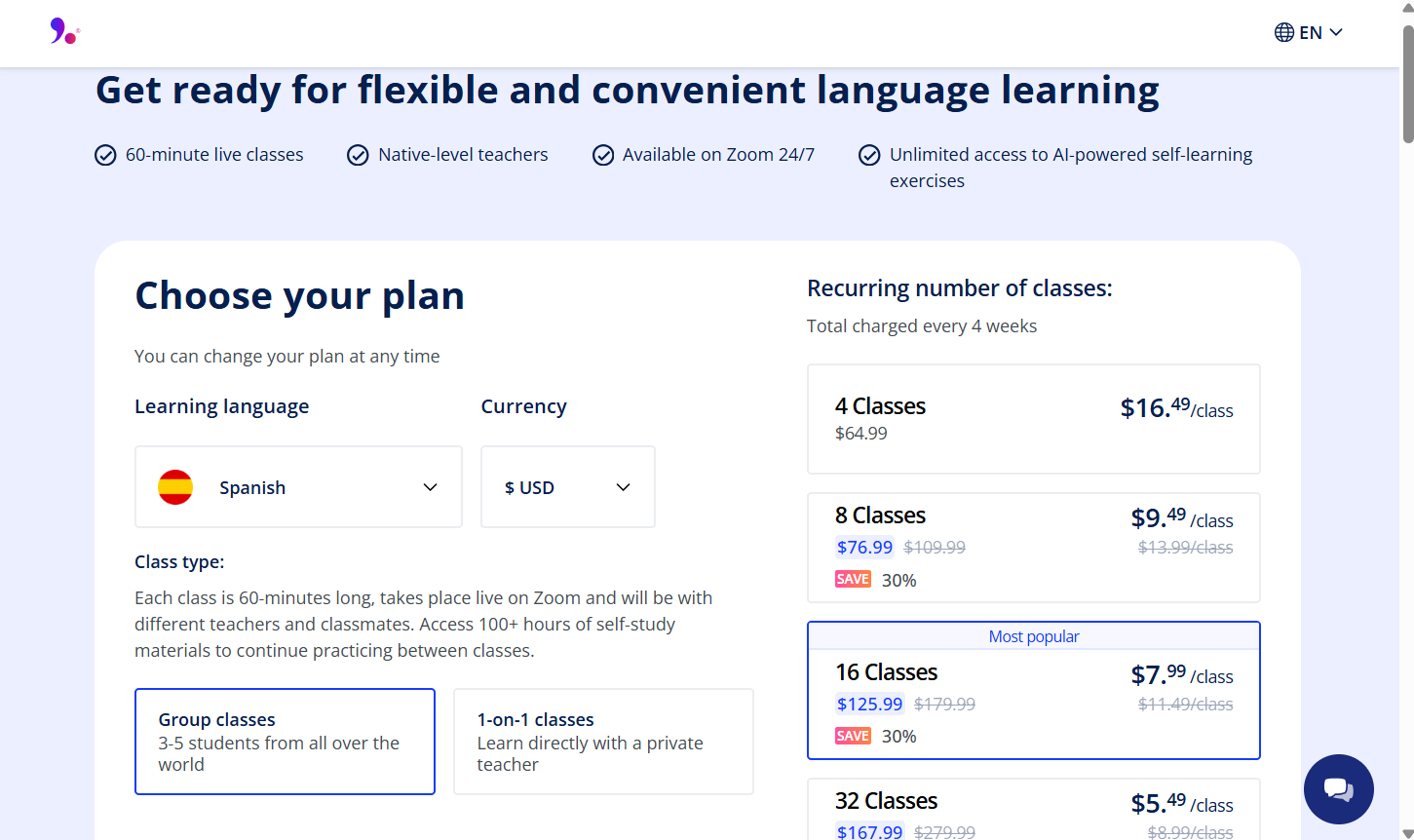
What they offer: Structured group or private classes following the CEFR framework (A1 through C1). Classes are 60 minutes with native teachers. Group classes typically have 3-5 students.
Who it's good for: Learners who want structured progression, consistent quality, and the option to take classes at various times throughout the day.
Approximate cost: Monthly subscriptions start around $60 USD.
Student feedback: Around 4.3/5 on Trustpilot. Learners appreciate the consistency of materials and scheduling flexibility. Some note that the pace can be fast for complete beginners.
Berlitz
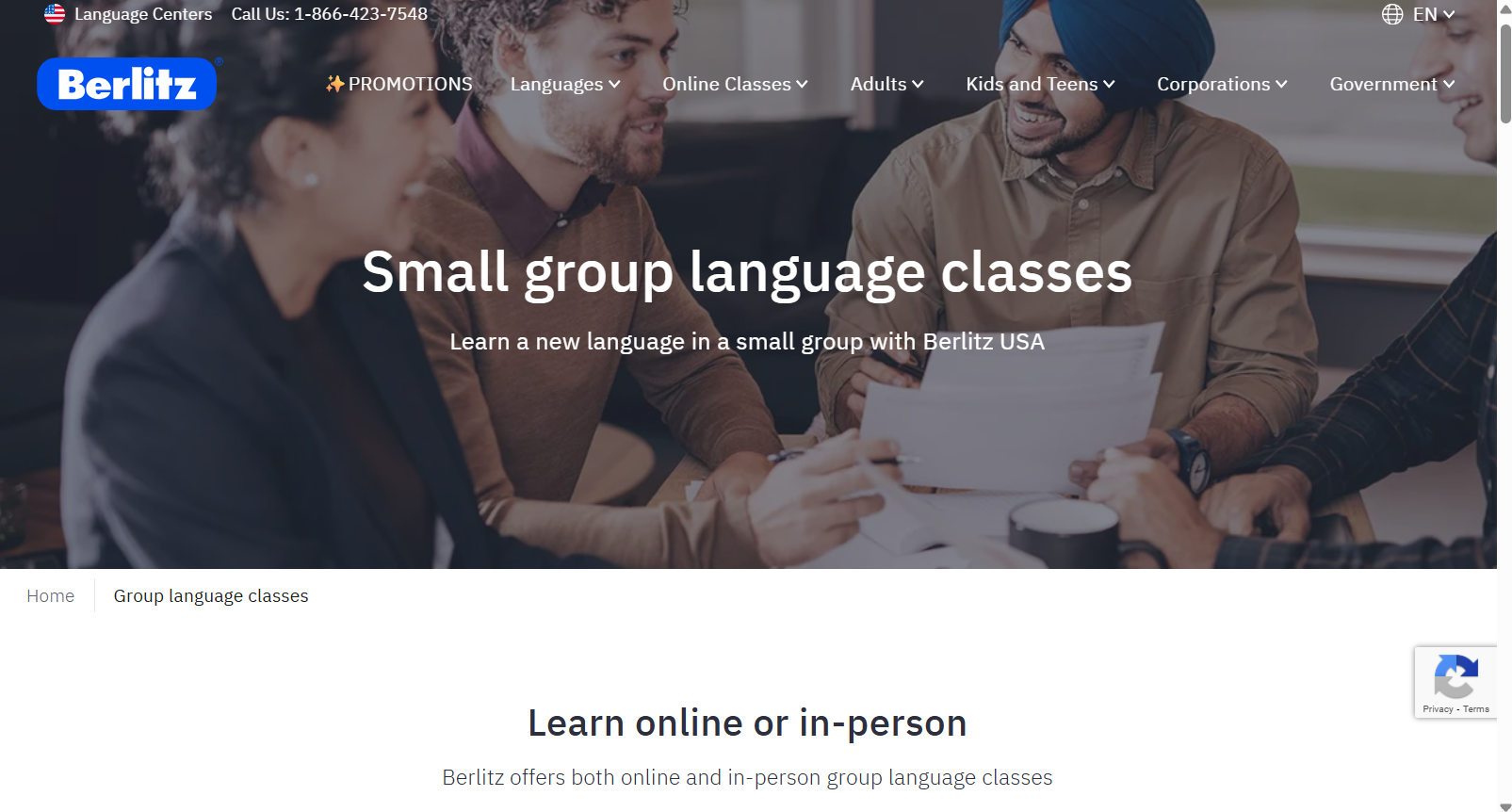
What they offer: One of the oldest language schools, now offering online instruction. Berlitz Live Online groups have 3-6 students with two 60-minute sessions per week. The method prioritizes conversation and immersion.
Who it's good for: Learners who want a premium, time-tested curriculum with certified instructors and strong academic credentials.
Approximate cost: Premium pricing, around $400-600 USD per month.
Student feedback: Known for quality instruction and structured methodology, though the cost is significantly higher than most alternatives.
SpanishVIP
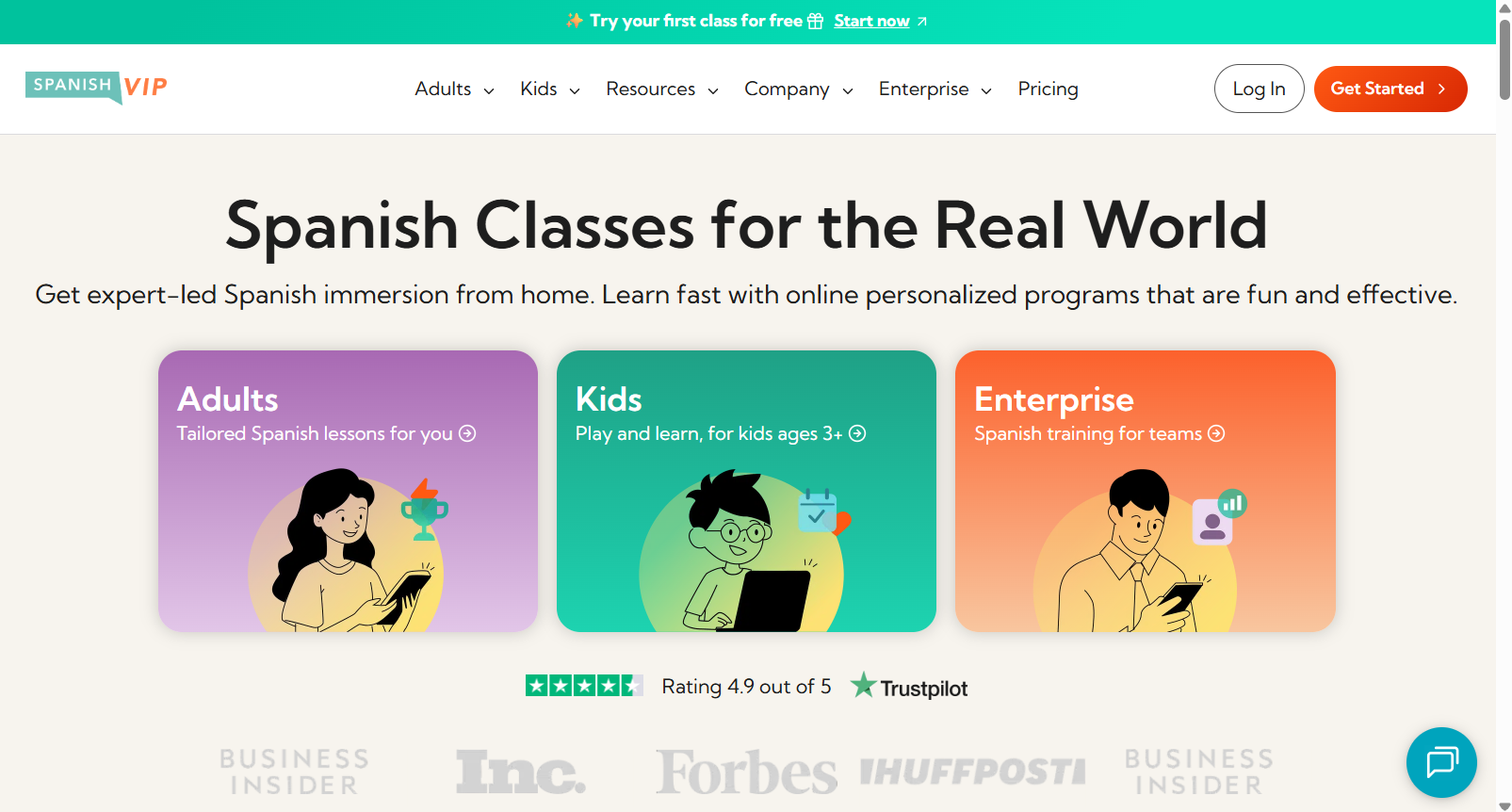
What they offer: Targets students who want frequent live interaction. Offers "unlimited" group online Spanish classes for adults (maximum 10 students) Monday through Friday via Zoom, plus optional one-on-one sessions.
Who it's good for: Learners who want community support, frequent practice opportunities, and teachers from Latin America.
Approximate cost: Monthly plans start around $129 USD.
Student feedback: Reviewers highlight the supportive community atmosphere and accessible Latin American teachers.
Enforex
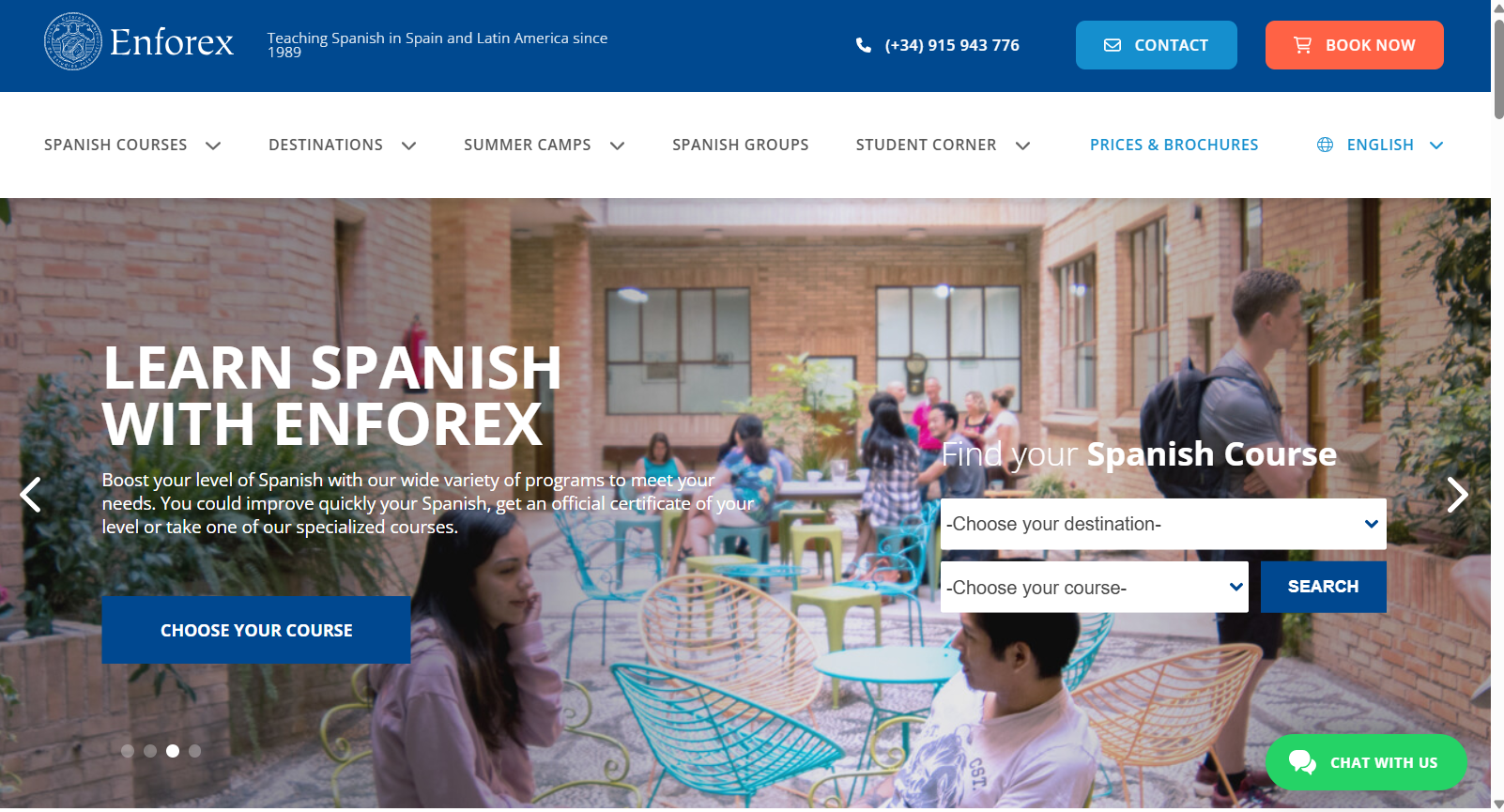
What they offer: Known for in-person immersion programs in Spain, Enforex also runs online group courses from A1 to C2. You can book from 2 to 25 lessons per week with typically 6-8 students per group.
Who it's good for: Learners who want a connection to Spanish culture and methodology, or who might eventually attend an in-person program in Spain.
Approximate cost: Prices vary by frequency, starting around $100 USD per week.
Student feedback: Trusted by university study-abroad programs and known for cultural authenticity.
123Habla
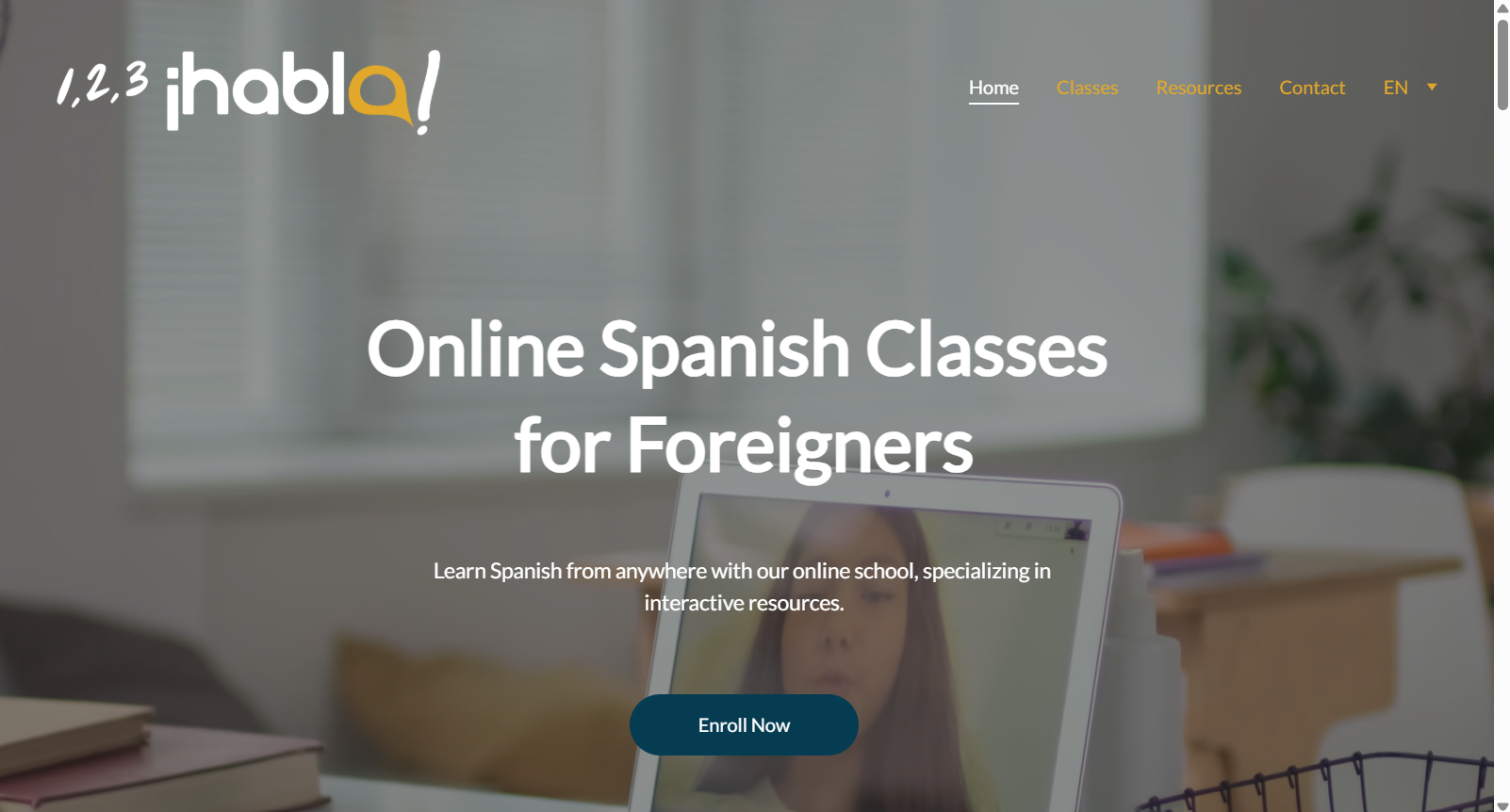
What they offer: A smaller but reputable school offering virtual group lessons with 2-6 students. Also provides specialized courses for business, legal Spanish, and DELE exam preparation.
Who it's good for: Learners needing specialized Spanish or who prefer smaller group sizes.
Approximate cost: Around $20 USD per hour.
Student feedback: Reviews mention personalized attention and consistent teaching quality despite being a smaller operation.
Teacher Marketplaces
If you value flexibility, want to choose your own teacher, and prefer to control your schedule and learning approach, marketplaces might work better for you.
italki
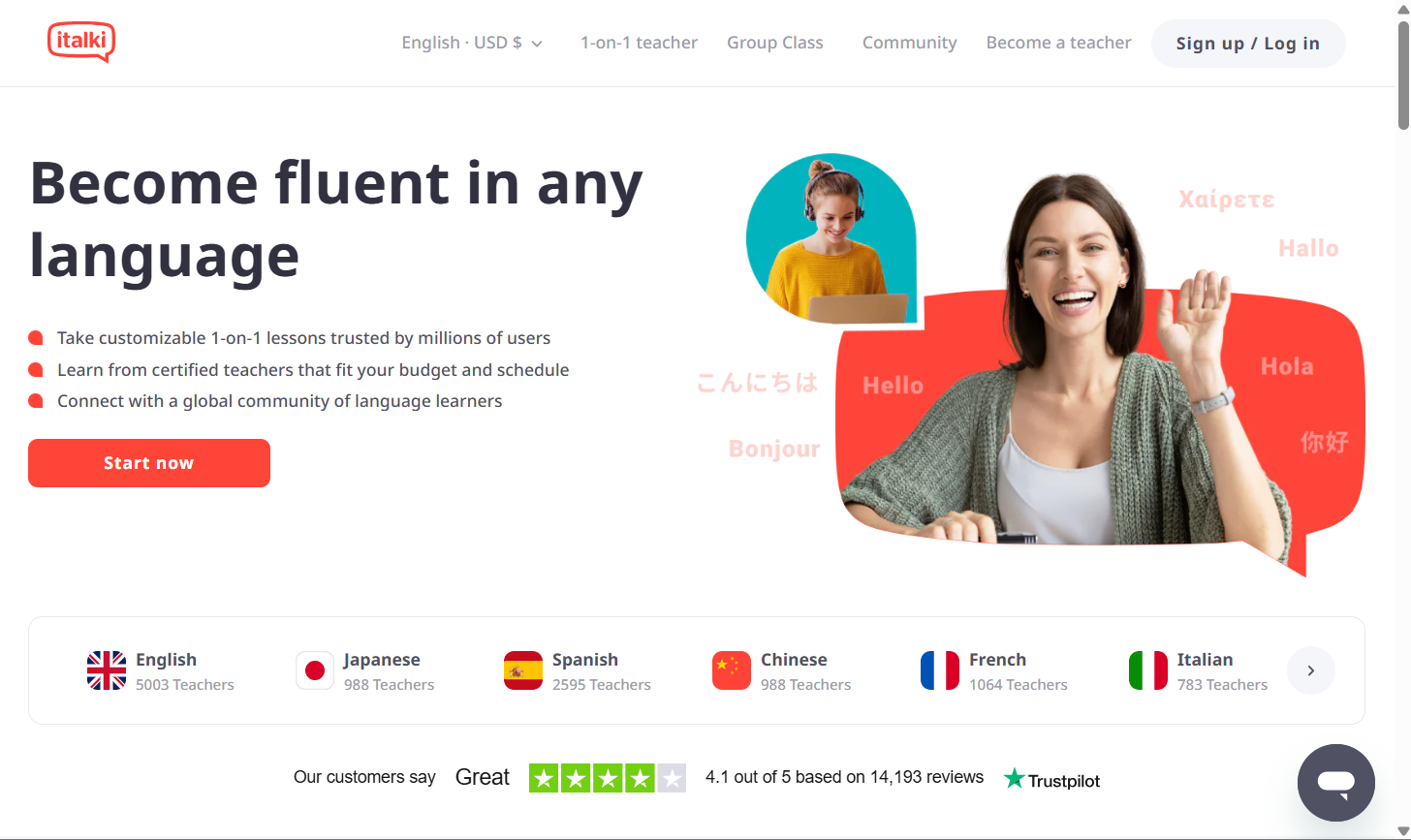
How it works: Marketplace for freelance tutors. Browse profiles, book trials, find your fit. Teachers set their own rates and schedules.
Strengths: Low entry cost, incredibly diverse teachers representing different Spanish-speaking countries and teaching methods, and very flexible.
Who it's good for: Budget-conscious learners, those who want exposure to multiple accents, or anyone who enjoys the process of finding and working with independent teachers.
Approximate cost: $5-35 USD per hour.
Platform rating: Around 4.0/5 on Trustpilot.
Preply
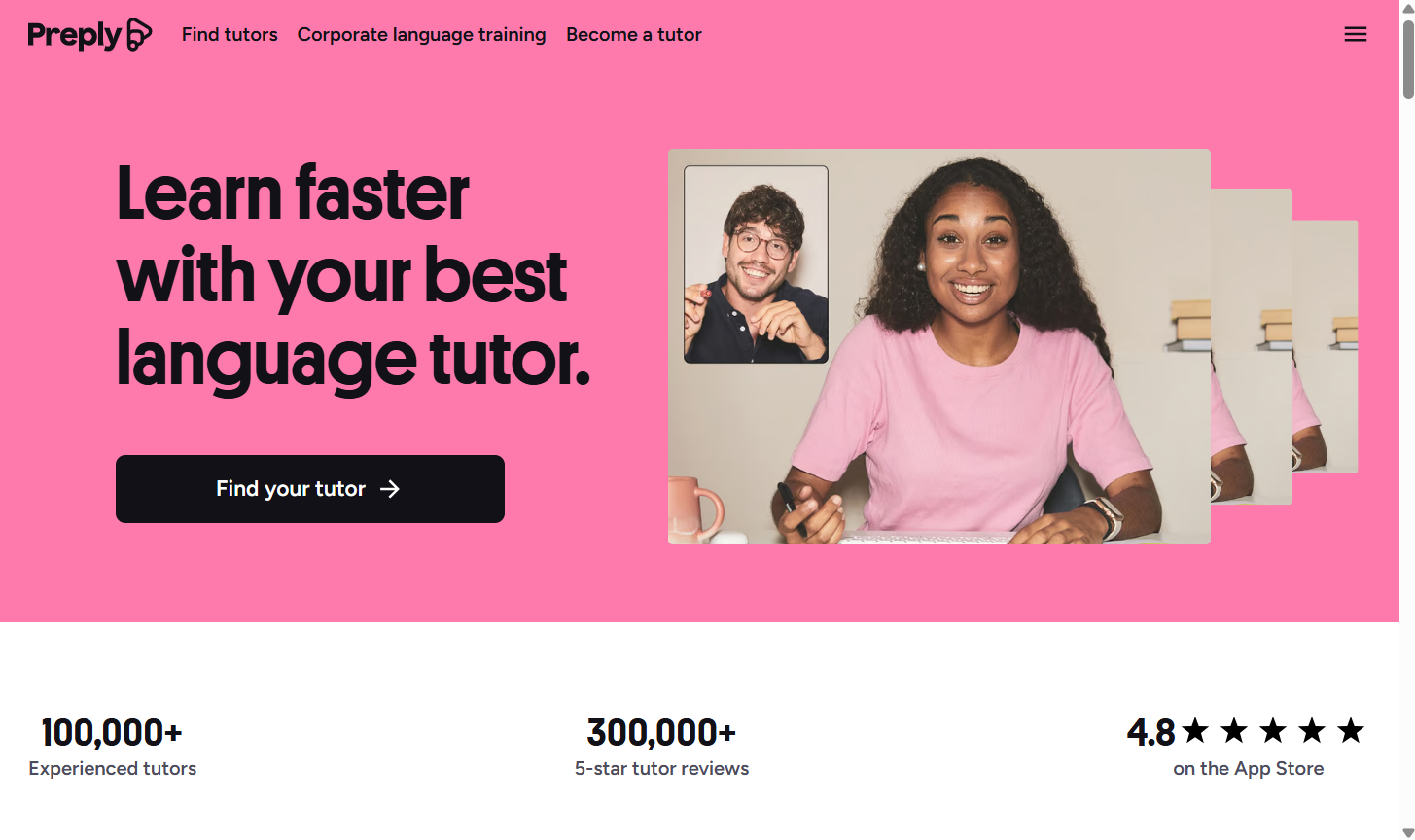
How it works: Marketplace, similar to italki, with verified tutors. You browse teacher profiles, watch intro videos, read reviews, and book trial lessons. Once you find a teacher you like, you book regular sessions.
Strengths: Huge teacher pool (thousands of Spanish teachers), very flexible scheduling, trial lessons available, wide range of teaching styles and specializations.
Who it's good for: Learners who want choice and control over their teacher selection, or those with specific scheduling needs.
Approximate cost: $5-40 USD per hour, depending on teacher experience and qualifications.
Platform rating: Around 4.1/5 on Trustpilot.
Languatalk
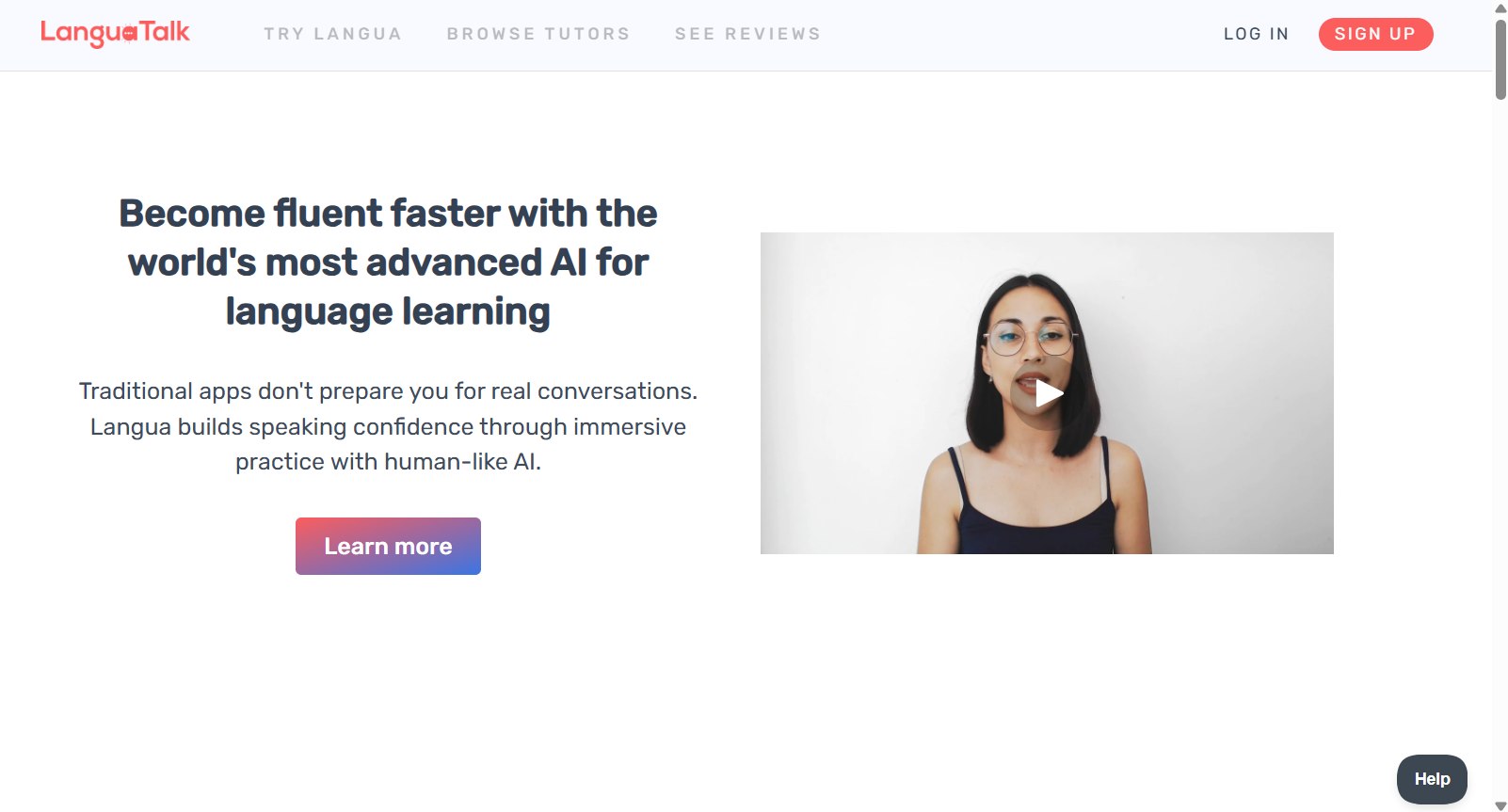
How it works: A curated platform that combines human lessons with AI support. Teachers are vetted more carefully than on larger marketplaces, and the platform includes AI-based speaking practice between lessons.
Strengths: Combines live conversation with technology-assisted practice, more curated teacher selection than larger marketplaces.
Who it's good for: Learners who want quality control in teacher selection plus supplementary AI practice tools.
Approximate cost: $20-40 USD per hour.
Platform rating: Around 4.0/5 on Trustpilot (smaller sample size due to newer/smaller platform).
Comparing Schools and Marketplaces
Online Schools:
- ✓ Structured curriculum and clear progression
- ✓ Consistent quality and methodology
- ✓ Group class options for social learning
- ✓ Organized scheduling systems
- ✗ Higher cost for private lessons
- ✗ Less teacher choice
- ✗ Less flexibility in content and approach
Teacher Marketplaces:
- ✓ Lower cost, especially at entry level
- ✓ Huge teacher selection
- ✓ Complete scheduling flexibility
- ✓ Control over teaching style and approach
- ✗ No structured curriculum (unless teacher provides one)
- ✗ Quality varies between teachers
- ✗ You must do more work to find the right fit
How to Choose Between Platforms
Consider these factors:
Your learning style: Do you prefer structure and consistency (schools) or flexibility and choice (marketplaces)?
Your budget: Marketplaces typically offer lower-cost options, especially for private lessons.
Your goals: Preparing for a specific exam like DELE? Structured schools or specialized teachers on marketplaces work well. General conversation? Either approach works.
Your Spanish level: Complete beginners often appreciate the structure schools provide. Intermediate learners often enjoy the flexibility of marketplaces.
Your schedule consistency: If your schedule varies week to week, marketplaces offer more flexibility. If you can commit to regular times, schools work well.
Your patience for trial and error: Finding the right teacher on a marketplace takes some experimentation. Schools provide more immediate consistency.
What to Look for in a Teacher or Platform
Regardless of where you take online Spanish classes for adults, look for:
Native or highly fluent speakers: You want teachers who speak Spanish naturally and can model correct pronunciation and usage.
Teaching experience: Not every native speaker knows how to teach. Look for teachers with training or experience in language instruction.
Clear communication style: Watch intro videos or read profiles to see if the teacher's communication style matches your preferences.
Flexibility and responsiveness: Good teachers and platforms are responsive to questions and accommodating when reasonable issues arise.
Positive reviews from students similar to you: If you're an adult professional, look for feedback from other adult learners, not just university students.
Trial lessons or guarantees: Reputable options let you try before committing fully.
Making Your Choice
Here's a simple decision framework:
Choose a structured school (Lingoda, SpanishVIP, Enforex, 123Habla) if:
- You want a clear curriculum and organized progression
- You prefer group classes for cost savings and social interaction
- You value consistency and don't want to spend time searching for teachers
- You're willing to pay more for structure and reliability
Choose Berlitz if:
- You want premium, time-tested methodology
- You have the budget for higher-quality instruction
- You value academic credentials and traditional teaching approaches
Choose a marketplace (Preply, italki, Languatalk) if:
- You want control over teacher selection and teaching approach
- You need maximum scheduling flexibility
- You're comfortable with some trial and error to find the right teacher
- You want lower-cost options, especially for private lessons
- You want exposure to teachers from specific Spanish-speaking regions
Beyond the Platform: What Actually Matters
Here's an important truth: the platform matters less than your consistency and engagement. Students succeed on all of these platforms, and students struggle on all of them.
What actually determines your success:
Regular attendance: Taking classes consistently, not sporadically.
Active participation: Engaging in class, asking questions, making mistakes.
Practice between classes: Using Spanish outside of your lessons.
Realistic expectations: Understanding that progress takes time.
Finding the right teacher fit: Whether through a school or marketplace, the teacher-student relationship matters enormously.
The best platform is the one you'll actually use consistently. Understanding the best way to learn Spanish for your unique situation will help you make the most of whichever platform you choose.
Getting Started Today
Ready to begin with online Spanish classes for adults? Here's your action plan:
- Clarify your specific goals: What do you want to accomplish in 3-6 months?
- Set a realistic monthly budget: What can you afford without financial stress?
- Decide on structure vs. flexibility: Do you want a school's curriculum or a marketplace's choice?
- Browse 2-3 platforms that match your preferences
- Book trial lessons: Most platforms offer these—try before committing
- Choose and commit: Pick one platform and commit to at least 8-12 lessons before evaluating
Remember that online classes work best when combined with other practices. Explore different ways to learn Spanish to understand how classes fit into a complete learning approach. Many successful learners wonder if they can teach themselves Spanish between classes—and the answer is yes, with the right strategies.
The Bottom Line
Quality online Spanish classes for adults are available across a range of platforms, from structured schools like Lingoda and Berlitz to flexible marketplaces like Preply and italki. Each has strengths depending on your learning style, budget, and goals.
The "best" platform is the one that matches your needs and that you'll use consistently. Don't get paralyzed by the search for perfection—choose something reasonable, commit to it for a few months, and adjust if needed.
The technology and teachers exist to support your success. What matters now is taking that first step: booking your first trial lesson and beginning your Spanish learning journey. Start today, stay consistent, and you'll be speaking Spanish sooner than you think.
Stay inspired on your Spanish journey with occasional updates, new articles, and helpful resources.