- Home
- Online Classes to Learn Spanish
Online classes to learn Spanish:
Finding the Right Fit for You
When you decide to learn Spanish, one of the first questions you face is how to study: Should you find in-person instruction or take online classes to learn Spanish? Should you join a group or work one-on-one with a teacher? There's no single right answer—it depends on your goals, schedule, budget, and learning preferences.
Online classes to learn Spanish have become increasingly popular, and for good reason. They offer flexibility and access to teachers worldwide that in-person classes simply can't match. But they also come with their own challenges. Let's explore what online Spanish classes offer, how they compare to in-person learning, and which format might work best for you.
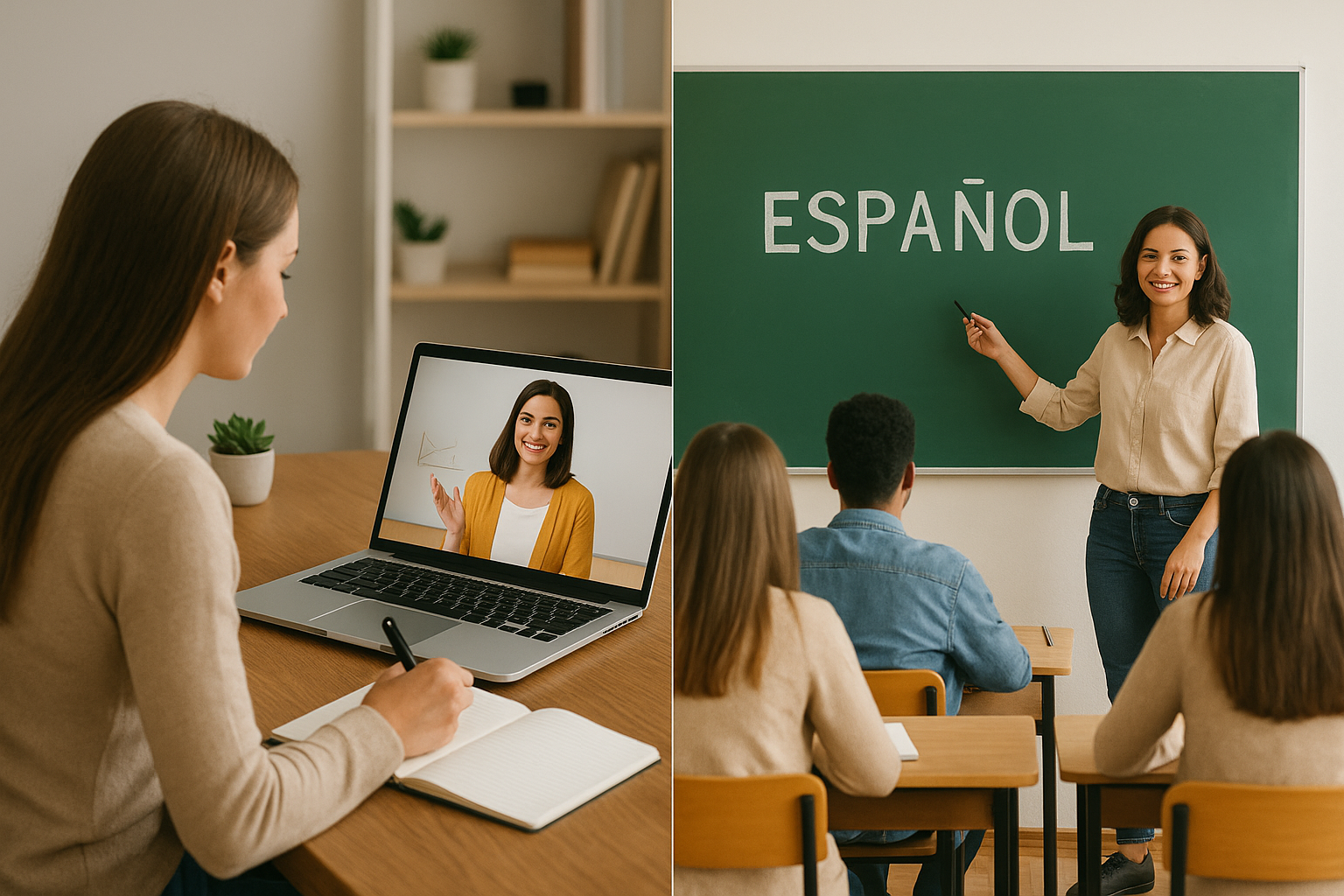
Why Consider Online Classes to Learn Spanish?
Online learning has transformed language education. What once required commuting to a physical classroom can now happen from your living room, during your lunch break, or even while traveling.
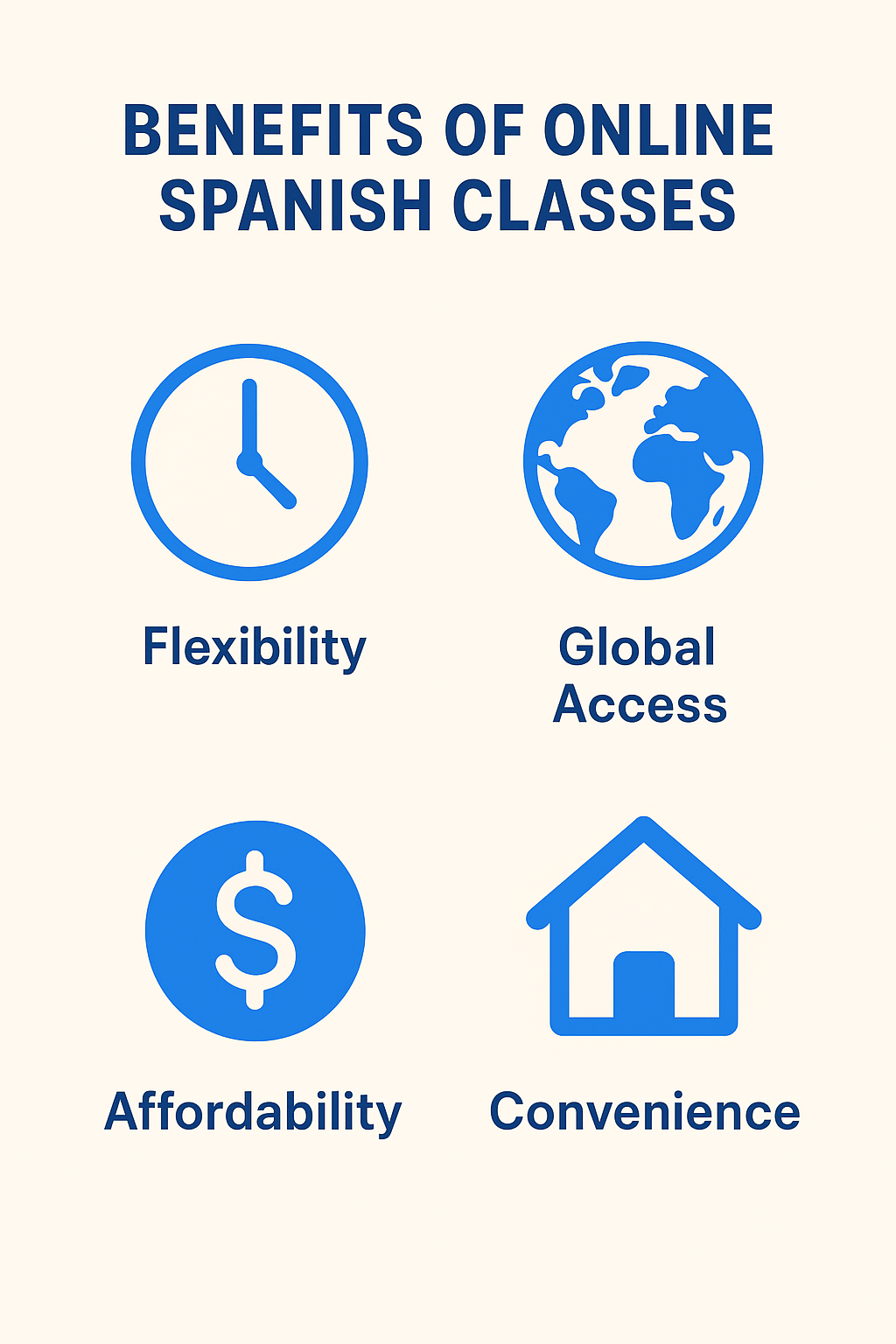
Flexibility and Convenience
Schedule on your terms: Most online platforms let you book classes at times that fit your schedule—early morning, late evening, or weekends. No need to rush through traffic to make a 7 PM class.
Learn from anywhere: Whether you're at home, in a hotel, or at a coffee shop, you can take your Spanish class as long as you have internet access.
No commute time: The time you'd spend driving to and from a language school can be used for actual practice or other responsibilities.
Easy to maintain consistency: When classes are more convenient, you're more likely to stick with them. Consistency is crucial for language learning.
Access to Native Teachers Worldwide
Choose from global talent: You're not limited to teachers in your city. You can work with instructors from Spain, Mexico, Argentina, Colombia, or any Spanish-speaking country.
Find the right accent: Want to learn Mexican Spanish for work? Or Castilian Spanish for a move to Spain? Online platforms let you choose teachers with the specific accent and regional vocabulary you need.
Specialized instruction: Need Spanish for medicine, law, or business? Online, you can find teachers with expertise in specific fields.
Often More Affordable
Lower overhead costs: Online schools don't pay for physical classroom space, so they can often charge less than traditional schools.
Competitive marketplace: Platforms like Preply and italki feature hundreds of teachers competing for students, keeping prices reasonable.
No transportation costs: You save money on gas, parking, or public transportation.
Online vs. In-Person Spanish Classes
Both formats can be effective, but they suit different needs and learning styles.
When Online Classes Work Best
You have a busy or unpredictable schedule: Online classes to learn Spanish are easier to fit around work, family, and other commitments.
You live in an area with limited Spanish-teaching options: small towns or rural areas often lack high-quality in-person Spanish instruction.
You're comfortable with technology: If you're already used to video calls for work or family, online classes will feel natural.
You want access to specialized teachers: Need a teacher who specializes in DELE exam prep or medical Spanish? You'll find more options online.
You prefer learning in a comfortable environment: Some people focus better at home than in a classroom.
When In-Person Classes Might Be Better
You thrive on face-to-face interaction: Some learners find it easier to connect with teachers and classmates in person.
You need the structure of a physical classroom: For some, going to a specific place helps maintain discipline and focus.
You struggle with self-motivation: In-person classes provide more external accountability.
You want cultural immersion: If you live in or can travel to a Spanish-speaking area, in-person immersion provides cultural context that online learning can't fully replicate.
You have technology concerns: If you don't have reliable internet or aren't comfortable with video conferencing, in-person might be less frustrating.
The Reality: They're More Similar Than Different
The format matters less than the quality of instruction and your consistency. Many students successfully learn Spanish online, and many learn in traditional classrooms. The key factors—good teaching, regular practice, and active engagement—matter more than whether you're on Zoom or in a physical room.
One-on-One vs. Group Classes
Another important decision is whether to take private lessons or join a group. Each format has distinct advantages.
One-on-One (Private) Classes
Advantages:
- Fully personalized: The teacher adjusts the pace, focus, and content to your exact needs
- Maximum speaking time: You spend the entire class practicing, not waiting for others
- Flexible topics: Want to focus on business vocabulary or travel phrases? Private lessons adapt to your goals
- Immediate feedback: The teacher can correct pronunciation and grammar errors as they happen
- Scheduling flexibility: Often easier to reschedule if something comes up
Disadvantages:
- Higher cost: Private lessons typically cost more per hour than group classes
- No peer interaction: You miss out on learning from others' questions and perspectives
- More pressure: Some students feel self-conscious being the only student
Best for: Busy professionals, learners with specific goals (exam preparation, business Spanish), those who need targeted pronunciation work, and people who progress quickly and don't want to be held back by group pace.
Group Classes
Disadvantages:
- Less individual attention: The teacher divides time among multiple students
- Fixed pace: The class moves at a speed that works for the group, not necessarily for you
- Less flexibility: Group classes typically have set schedules you must follow
- Varying commitment levels: Some classmates may be more or less dedicated than you
Best for: Students on a budget, those who enjoy social learning, people who benefit from external structure and regular schedules, and learners who want exposure to different accents and speaking styles.
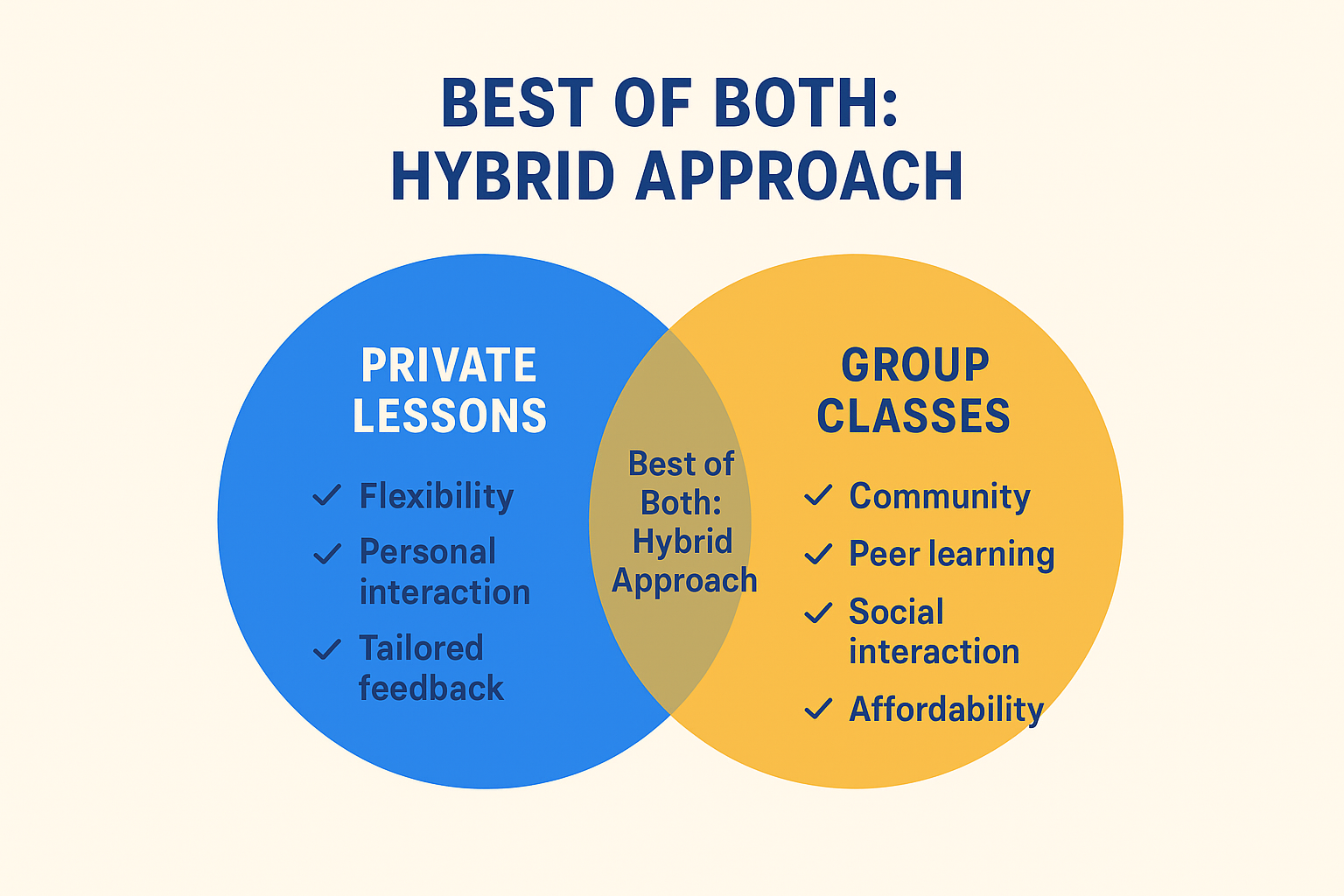
The Hybrid Approach
Many successful Spanish learners combine both formats. They might take group classes for regular structure and community, then add occasional private sessions to work on specific challenges like verb conjugations or pronunciation. This hybrid approach balances cost with personalized attention.
How to Choose Between Online Group and Private Classes
Consider these factors when deciding:
Your budget: What can you afford weekly or monthly? Private lessons cost more but may reduce total learning time if you progress faster.
Your learning style: Do you learn better with structure and social interaction, or do you prefer focused, personalized attention?
Your goals: Preparing for a specific exam or job interview? Private lessons might be more efficient. Learning for general conversation and travel? Group classes work well.
Your schedule: Do you need maximum flexibility, or can you commit to regular class times?
Your personality: Are you comfortable being the center of attention, or do you prefer sharing the spotlight?
Your current level: Complete beginners often benefit from private lessons to build confidence before joining a group. Intermediate learners often enjoy group classes for practice.
There's no wrong choice. Both formats can be effective when you're consistent and engaged. Understanding different ways to learn Spanish will help you see how online classes fit into your overall learning strategy.
What to Look For in Online Spanish Classes
Whether you choose group or private, online or in-person, look for these qualities:
Qualified, native or highly fluent teachers: Teachers should speak Spanish naturally and understand how to teach it effectively. Many excellent programs teach Spanish in Spanish from the beginning.
Structured curriculum: Especially for group classes, a clear progression from basic to advanced topics helps ensure you're learning efficiently.
Speaking practice from day one: Language learning requires production, not just consumption. Good classes get you speaking immediately.
Flexibility in booking and cancellation: Life happens. Look for reasonable policies that let you reschedule when needed.
Trial lessons or money-back guarantees: Reputable platforms let you try before fully committing.
Positive reviews from real students: Check independent review sites to see what other learners say.
Making Online Classes Work for You
To get the most from online classes to learn Spanish:
Create a dedicated learning space: Even if it's just a corner of your kitchen table, having a consistent spot helps you focus.
Test your technology beforehand: Make sure your internet, camera, and microphone work properly before class starts.
Eliminate distractions: Close unnecessary browser tabs, silence your phone, and let household members know you're in class.
Engage actively: Don't be passive. Ask questions, volunteer answers, and practice even when you're nervous about making mistakes.
Do homework and review: The class itself isn't enough. Regular review and practice between sessions accelerates your progress.
Be consistent: Try to take classes at regular times each week. Consistency builds momentum.
When Online Classes Aren't Enough
Online classes to learn Spanish are valuable, but they're often just one piece of your learning strategy. Most successful Spanish learners combine classes with:
Self-study: Using apps, books, or online resources between classes.
Comprehensible input: Watching Spanish shows, listening to podcasts, reading at your level.
Conversation practice: Speaking with native speakers outside of class through language exchanges
Real-world use: Finding opportunities to use Spanish in daily life
If you're wondering whether you can teach yourself Spanish or if you need formal classes, the answer is often "both." Classes provide structure and feedback, while self-study builds consistency and lets you focus on your interests.
The Bottom Line
Online classes to learn Spanish offer flexibility, access to global teachers, and often lower costs than traditional in-person instruction. Whether you choose group classes for community and affordability or private lessons for personalized attention, what matters most is finding an approach that fits your life and goals.
The format—online or in-person, group or private—is less important than the quality of teaching and your consistency in attending and practicing. Many learners succeed with online classes, many with in-person classes, and many with a combination of both.
The best approach is the one you'll stick with. Consider your schedule, budget, learning style, and goals, then choose the format that makes regular practice most achievable for you.
Ready to explore specific options for online Spanish classes? Check out our guide to [online Spanish classes for adults](link: online-spanish-classes-for-adults) to find platforms and programs that might work for your situation.

Getting Started
If you're ready to try online Spanish classes:
- Clarify your goals: What do you want to achieve in the next 3-6 months?
- Set a realistic budget: What can you comfortably invest weekly?
- Decide on format: Group for community and cost savings, or private for personalized focus?
- Research options: Look at platforms that match your needs
- Try a trial lesson: Most platforms offer this—take advantage of it
- Commit to consistency: Schedule regular class times and treat them as non-negotiable
Learning Spanish online is more accessible than ever. The technology, teachers, and platforms exist to support your success. The question isn't whether online classes can work—it's whether you're ready to commit to the process.
Understanding the best way to learn Spanish for your unique situation will help you make the most of whatever format you choose. Start today, stay consistent, and you'll be surprised how quickly you progress.
Stay inspired on your Spanish journey with occasional updates, new articles, and helpful resources.