- Home
- Ways to Learn Spanish
- Learn Spanish in Spanish
Learn Spanish in Spanish: Why It Works Better Than You Think
When you first start looking for Spanish courses or teachers, you might feel relieved when you find options taught in English or your native language. The idea of choosing to learn Spanish in Spanish from day one can seem intimidating, even impossible. How can you possibly understand a teacher who only speaks Spanish when you don't know any Spanish yet?
This fear is completely normal. Almost every new learner worries about this. But here's what many successful Spanish learners have discovered: when you learn Spanish in Spanish—from the very beginning—it's not only possible, it's often the most effective approach. With the right techniques and methodology, you can learn a new language from scratch without needing to resort to English or your native language at all.
Let's explore why this approach works, how teachers make it possible, and why you might actually prefer it once you try it.
Whether you're looking for free apps that teach Spanish in Spanish or free online resources, understanding this methodology will help you make the most of them.
Why New Learners Fear Learning in the Target Language
Your concerns about choosing to learn Spanish in Spanish are understandable:
"What if I don't understand anything the teacher says?"
"Won't I waste time being confused instead of actually learning?"
"Isn't it faster to have things explained in English?"
"How can I learn grammar concepts without explanations in my language?"
These worries make sense on the surface. Having a teacher explain things in English feels safer and more efficient. But this intuition, while natural, doesn't match what actually happens in practice.
The reality is that when teachers use proper methodology—visuals, gestures, cognates, context, voice tones, and other aids—learners understand far more than they expect. And this understanding is actually deeper and more memorable than translations provide.
How Teachers Make Learning in Spanish Possible
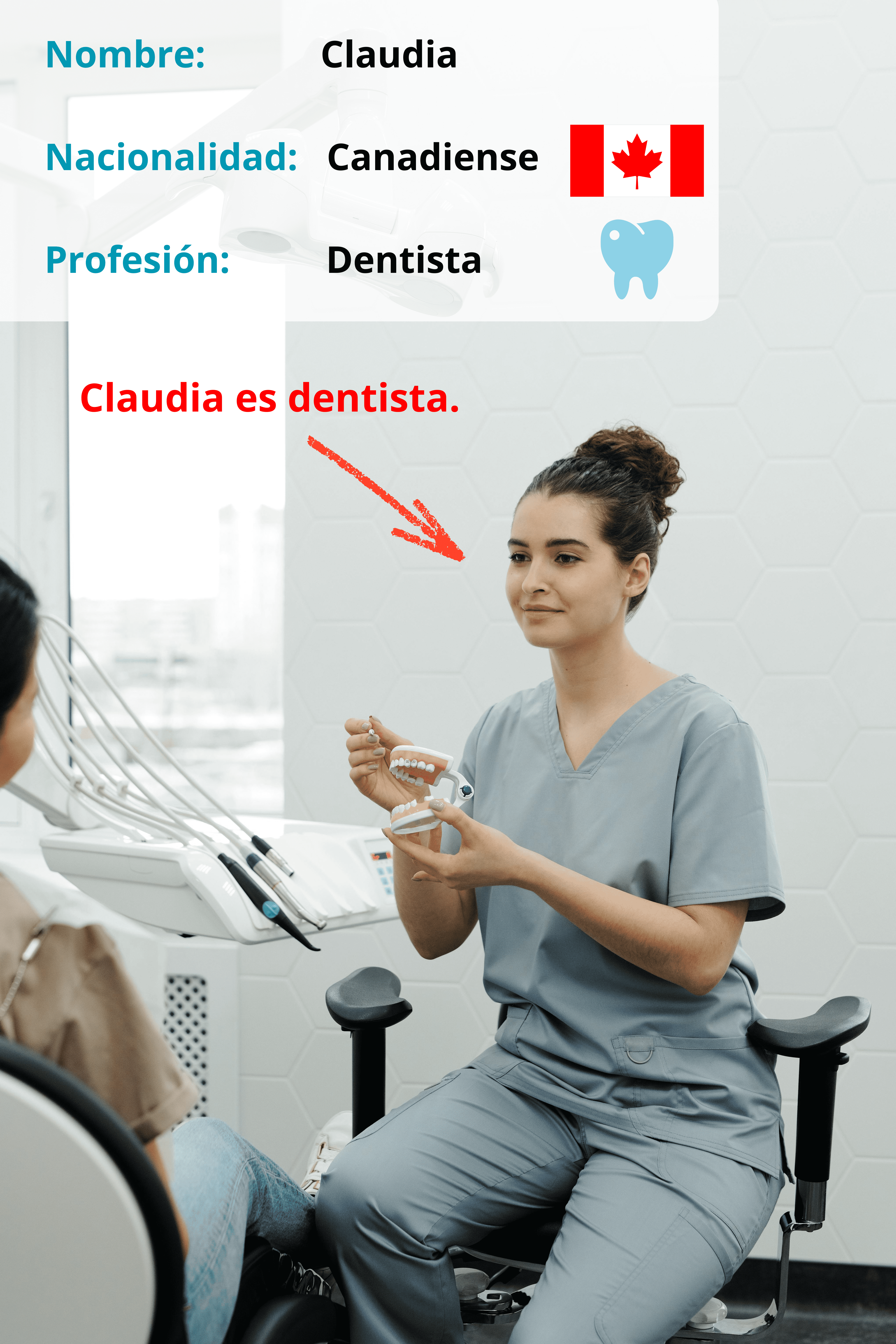
You might be wondering: "How can I possibly understand a Spanish-only class when I'm a complete beginner?" The answer lies in teaching techniques specifically designed for this approach.
I teach Spanish in Spanish, and I've seen countless students go from nervous beginners to confident speakers using this method. I use visuals, cognates, context, gestures, voice tones, and different aids to help learners understand what I'm expressing. This actually makes learning more vivid and words easier to remember.
I'm not alone in this experience. I've learned Russian with a teacher who didn't speak Spanish or English. My English lessons were in English. I am learning French in French. And I've met many other language learners with similar stories—learning without relying on their native language and finding it incredibly effective. In fact, many of us prefer not to learn a new language with the aid of another language.
Effective teachers who work entirely in Spanish use:
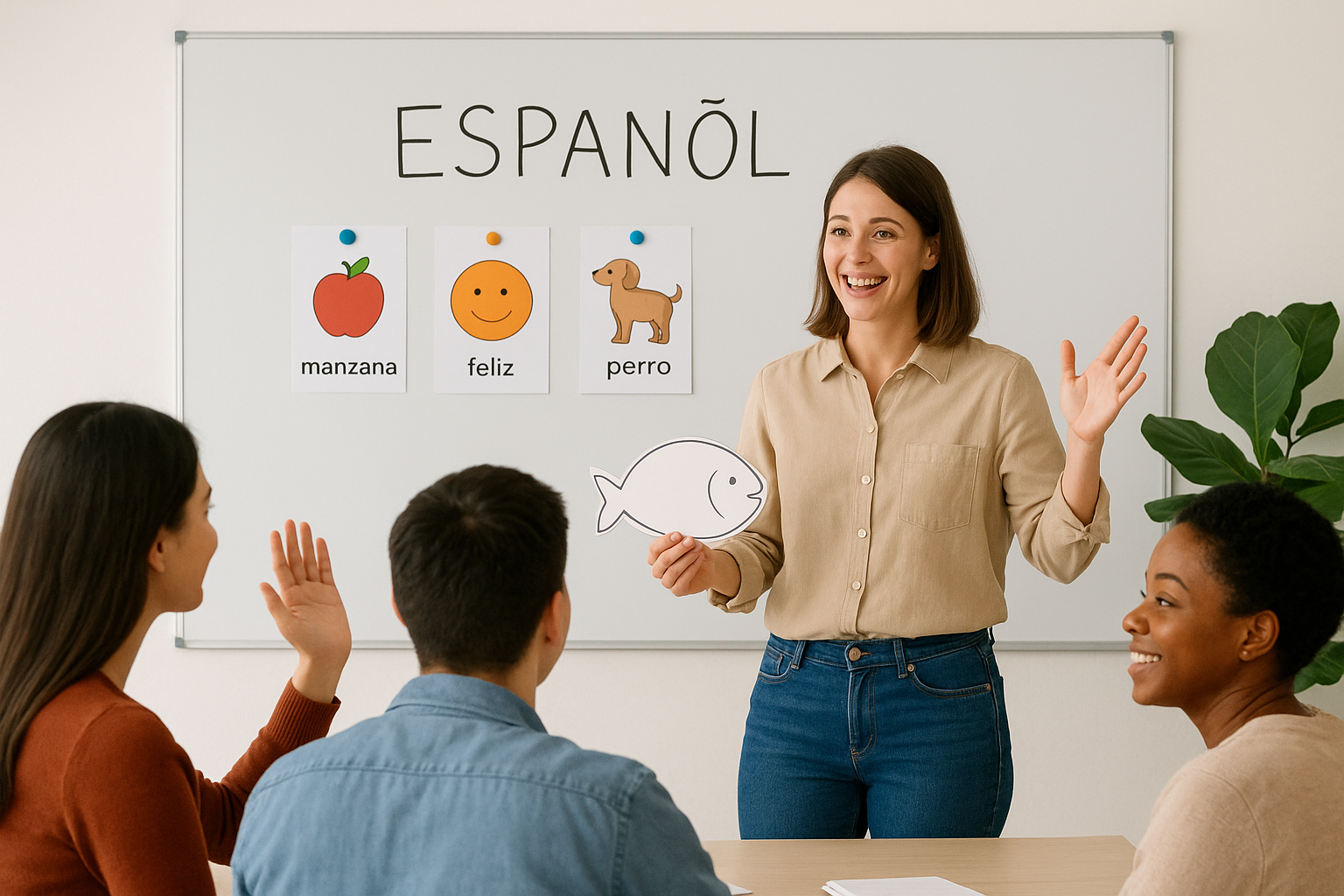
Visual Aids: Pictures, drawings, real objects, and videos that make meaning clear without translation. When you see a picture of an apple while hearing "manzana," you don't need English to understand what manzana means.
Cognates: Words that are similar in Spanish and English. Words like "familia," "importante," "problema," and thousands of others are immediately recognizable. Teachers use these strategically to build your confidence and comprehension from day one.
Context: Situations and scenarios that make meaning obvious. If a teacher mimes being cold and says "tengo frío," you understand without translation.
Gestures and Body Language: Physical communication that clarifies meaning. Actions, facial expressions, and demonstrations often communicate more clearly than verbal explanations.
Voice Tones and Emphasis: The way something is said conveys enormous meaning. Questions sound like questions, excitement sounds like excitement, regardless of language.
Comprehensible Input: Teachers carefully adjust their Spanish to your level—speaking clearly, using simple vocabulary and structures, and gradually increasing complexity as you progress. You understand most of what you hear because it's designed for your current level.
Repetition and Variation: The same concepts are presented multiple times in slightly different ways, ensuring you grasp the meaning through exposure rather than translation.
This approach actually makes learning more vivid and memorable. When you associate "manzana" directly with the image and concept of an apple, that connection is stronger than associating "manzana" with the English word "apple," which then connects to the concept. You're building direct associations with meanings, not building a translation bridge.
Why Learning Spanish in Spanish Accelerates Your Progress
Here's what happens when you learn Spanish in Spanish from the beginning:
More Spanish Exposure: Every minute of your lesson is in Spanish. You're hearing Spanish, processing Spanish, and thinking in Spanish from day one. This maximizes your exposure to the language, which is critical for acquisition. However, exposure alone isn't enough—you also need to actively produce Spanish through speaking and writing.
Direct Understanding: You learn to understand Spanish directly, without the mental step of translating to English first. This develops the intuitive fluency you're ultimately aiming for.
Faster Comprehension: It might seem counterintuitive, but many learners find they actually understand faster when lessons are in Spanish. They're forced to focus on context, gestures, and meaning rather than waiting for translations.
Better Retention: Words and phrases learned through context, images, and experience stick in your memory better than translated vocabulary lists. Your brain creates richer associations.
Pattern Recognition with Guidance: Adult learners benefit from guidance in recognizing grammar patterns. Through examples and practice, not lengthy explanations, you develop an intuition for how Spanish works. This is different from how children learn—as an adult, you can use your analytical skills to accelerate pattern recognition.
Real Communication from Day One: You're engaging in actual Spanish communication immediately, not just studying about Spanish. This builds confidence and practical skills faster.
No Translation Habit: You never develop the habit of mentally translating everything, which is one of the biggest obstacles to fluency. People who learn with translation often struggle to break this habit later.
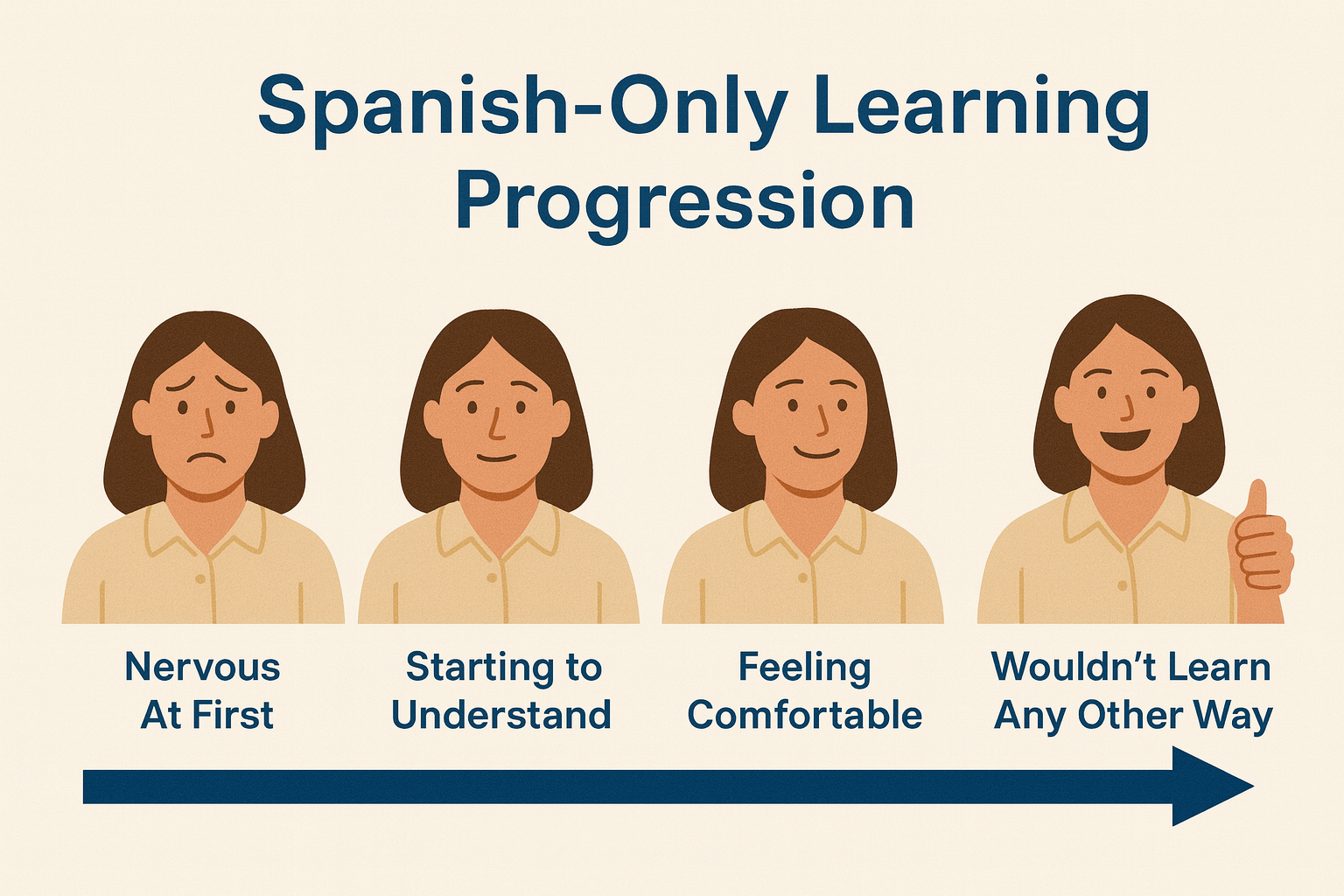
Students who initially felt nervous about Spanish-only instruction often report feeling like they're making progress faster than they expected. Once they experience it, many say they wouldn't want to learn any other way. This is one of the key reasons why the decision to learn Spanish in Spanish can transform your language learning journey.
Successful Methods That Use This Approach
The approach to learn Spanish in Spanish isn't a new or experimental idea. It's been used successfully by some of the most respected language learning methods:
Rosetta Stone built its entire reputation on immersive, target-language-only instruction. Millions have learned languages through their approach, which never uses English translations.
Dreaming Spanish has helped many learners acquire Spanish through comprehensible input entirely in Spanish, starting from the absolute beginner level. If you're looking for [free online resources in Spanish](link: spanish-in-spanish-online-free), this is an excellent option.
The Natural Approach and Comprehension-Based methods have extensive research supporting the effectiveness of learning through the target language from the start.
Many successful Spanish teachers around the world use this methodology with excellent results. They've refined techniques for making Spanish comprehensible to beginners without resorting to English.
Even more telling: most methods for learning English cater to speakers from different language backgrounds—Chinese, Arabic, Spanish, Russian, and dozens of others—and successfully use an English-only approach. If learners from such diverse backgrounds can learn English in English, you can absolutely learn Spanish in Spanish.
If you're wondering how to express this concept in Spanish, the phrase is "aprender español en español"—you can learn more about the translation and meaning.
The success of these methods demonstrates that learning in the target language isn't just possible—it's often superior. And if you're looking for ways to try this approach without spending money, there are ways you can use free apps to learn Spanish in Spanish.
The Science Behind Why It Works

Language acquisition research supports learning through the target language. Your brain can process and learn languages through exposure and use, and adults bring additional cognitive abilities that children don't have—the ability to recognize patterns analytically and make conscious connections.
When you learn Spanish in Spanish:
- You build direct neural pathways between Spanish words and meanings
- You develop an understanding of grammar through guided pattern recognition, not just passive exposure
- You train your ear to process Spanish sounds and rhythms
- You practice both understanding (input) and producing (output) Spanish
- You use your adult cognitive advantages to accelerate learning
Adult language learning is different from how children acquire their first language. As an adult, you benefit from guidance in recognizing patterns, conscious practice in production, and the ability to understand explanations when needed. The goal is to combine meaningful exposure with active production and strategic guidance to develop fluency efficiently.
What About Grammar Explanations?
You might be thinking: "But I need to understand grammar rules. How can I learn about the subjunctive or verb conjugations without explanations in English?"
This is a fair question, and the answer has nuances.
How adults learn differently: When you're exposed to Spanish in a way that you can understand it, your brain begins to internalize patterns. This is how children learn their first language—through natural exposure. As an adult, your brain works differently. It might be more difficult to absorb language patterns purely through exposure, but you have certain advantages. You have the cognitive ability to recognize patterns analytically when they're pointed out to you. This is a powerful tool that children don't have.
When working with grammar: When I work with grammar concepts, I don't explain rules in the traditional sense. Instead, I show different examples, point out key features, and emphasize patterns. I do use conjugation charts, but not for students to translate and memorize—rather to point out patterns. When learners start recognizing these patterns, they begin making logical assumptions. Through repetition and practice in both understanding and producing Spanish, they internalize these patterns and develop an intuition for the language. They make an assumption about how something should be said, and usually that assumption is correct because they've trained their brain to recognize the pattern. It's more like training than explaining grammatical rules.
Production is essential: Understanding patterns through input is important, but you must also practice producing Spanish. Speaking and writing force you to actively use the patterns you're learning, which solidifies your understanding in a way that passive consumption cannot.
For certain language backgrounds: If you speak a language with similar grammar, you already have an advantage. For example, it's easier to understand what the subjunctive is in Spanish if you're a French speaker, since this verb form exists in that language too. But even for concepts that don't exist in your native language, guided pattern recognition combined with active production works remarkably well.
The key insight is that adult learning combines exposure to comprehensible input, guidance in recognizing patterns, and active production. This combination is more effective than any single approach alone.
Overcoming the Initial Fear
Almost everyone feels nervous about Spanish-only instruction at first. This is normal. Here's what learners typically experience:
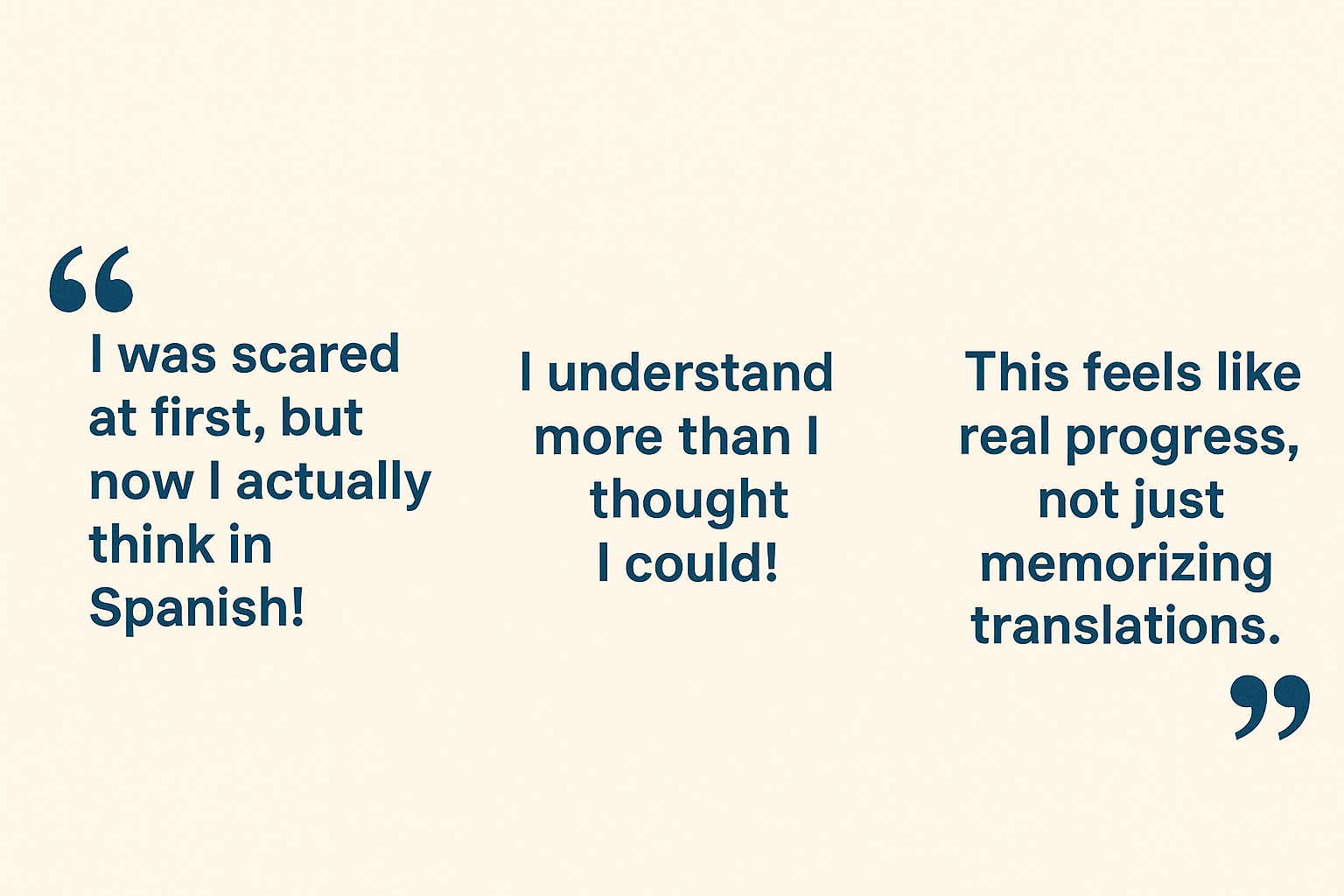
At First: You might feel a bit lost sometimes, but you're surprised by how much you understand through context and gestures. It's challenging but engaging. One student told me, "I was terrified at first, but I realized I was understanding more than I thought I could just by paying attention to everything—not just words, but gestures, pictures, and the way things were said."
As You Progress: You start catching words and phrases more easily. Your brain is adapting to processing Spanish sounds and patterns. Many learners report moments where they suddenly realize they understood a whole sentence without thinking about English at all.
When It Clicks: You realize you're understanding most of what's happening without needing translation. It starts feeling natural. As one learner put it, "I can't imagine learning any other way now. The idea of constant translation seems like it would actually slow me down."
Looking Back: People who were initially scared often say they wouldn't want to learn with the aid of their native language anymore. They feel they're making progress faster and that their Spanish feels more natural because they're thinking in Spanish, not translating.
The timeline varies from person to person—some adapt quickly, others need more time—but the pattern is consistent. The initial discomfort is temporary, and your brain adapts. Most learners find the approach becomes comfortable much faster than they expected.
A common sentiment I hear: "I was nervous in my first Spanish-only session, but I understood way more than I expected. And now I realize I'm actually thinking in Spanish sometimes, not just translating in my head."
When Some English Might Be Helpful
While learning Spanish in Spanish is highly effective, there are specific situations where a bit of English or your native language can be useful:
Complex cultural concepts that don't have direct equivalents might benefit from brief explanation.
Specific questions about subtle differences between similar words might be clarified more quickly with translation.
Administrative details about the course itself (schedules, payments, etc.) can be handled in your native language.
If you're completely stuck on something and it's creating frustration, a quick clarification in English can get you unstuck and back to learning in Spanish.
The key is that these should be exceptions, not the rule. The vast majority of your learning time should be in Spanish, with your native language used sparingly and strategically when it genuinely helps rather than hinders.
Real Results from Real Learners
People who commit to learning Spanish in Spanish often report:
"I feel like I'm actually communicating, not just studying."
"Words stick in my head better because I associate them with images and experiences, not English translations."
"I can think in Spanish now, instead of translating in my head."
"I was scared at first, but now I wouldn't want to learn any other way."
"I understand native Spanish conversations better because I learned to process Spanish directly."
"My pronunciation is better because I learned by listening and imitating, not by reading English phonetic guides."
These aren't isolated experiences. This is the typical trajectory for learners who embrace Spanish-only instruction with qualified teachers who use proper methodology.
Finding Quality Spanish-in-Spanish Instruction
If you're convinced to try learning Spanish in Spanish, look for:
Teachers experienced in this methodology: Not all teachers know how to teach effectively without using English. Look for those specifically trained in comprehensible input, natural approach, or immersion methods.
Progressive curriculum: Content should start at your level and gradually increase in complexity, always staying mostly comprehensible.
Visual and contextual support: Good programs use images, videos, gestures, and real-world contexts extensively.
Speaking practice from day one: You should be encouraged to respond in Spanish immediately, even with single words or simple phrases.
Patient, encouraging environment: The best teachers create a space where it's safe to make mistakes and where understanding develops naturally.
There are many options available—online platforms, local teachers, and language schools that specialize in this approach. When exploring different [ways to learn Spanish](link: ways-to-learn-spanish), consider trying a Spanish-only approach with a qualified instructor.
Making the Most of Spanish-Only Learning
To succeed with this approach:
Trust the process: Your brain can handle this. Give it time to adapt.
Focus on understanding, not perfection: You don't need to catch every word to benefit. Understanding the gist is enough, especially early on.
Engage actively: Respond, ask questions (in Spanish), participate. Passive listening isn't enough.
Practice between lessons: The more Spanish exposure you get, the faster you'll progress. Watch Spanish content, even if you don't understand everything.
Be patient with yourself: There will be moments of confusion. That's normal and part of the learning process.
Celebrate small wins: Notice when you understand something without translation. These victories build confidence.
The Long-Term Advantage
Learning Spanish in Spanish sets you up for long-term success. You develop the habit of thinking directly in Spanish from the beginning. You train your ear to process natural Spanish. You build confidence in real communication.
When you eventually interact with native Spanish speakers in real situations, you'll be better prepared because your learning mirrored that experience. You won't be thrown off by the absence of English translations because you never relied on them.
Students who learn this way often achieve functional fluency faster and feel more comfortable in real Spanish-speaking environments than those who learned primarily through translation.
Ready to Learn Spanish in Spanish?
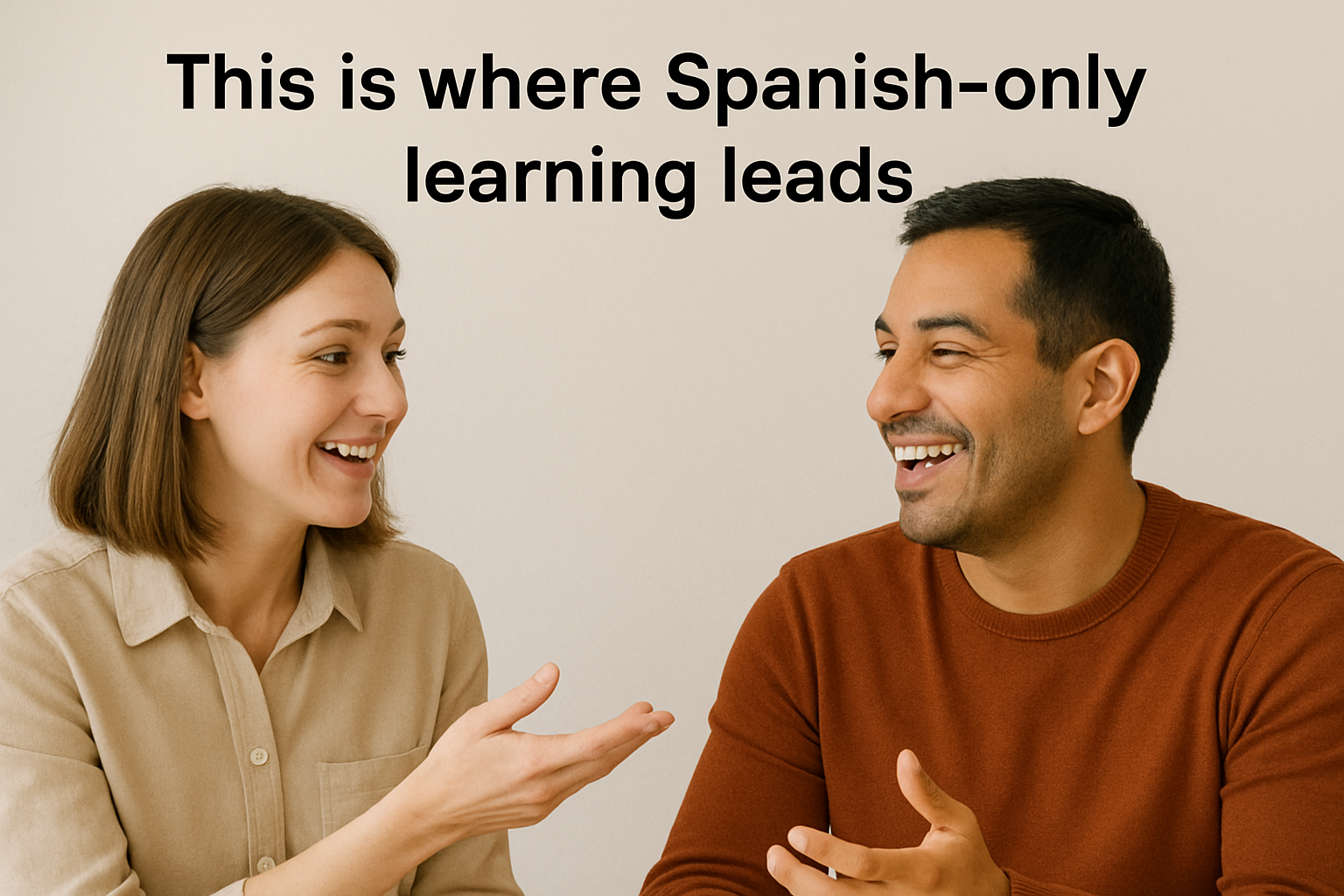
Learning Spanish in Spanish might seem intimidating now, but it's one of the most effective ways to develop real, functional Spanish skills. With the right teacher and methodology, you'll be understanding and communicating in Spanish far sooner than you think.
The fear you feel is normal—almost everyone feels it at first. But on the other side of that initial discomfort is faster progress, deeper understanding, and genuine communication skills.
If you're looking for the most direct path to fluency, consider finding instruction that uses Spanish from day one. Your future Spanish-speaking self will thank you for making this choice.
To understand more about which learning approach might work best for you, explore the best way to learn Spanish for your individual situation. Whether you choose Spanish-only instruction or another method, the most important thing is to start and stay consistent.
Take the First Step
You don't have to commit to Spanish-only learning forever. Try it for a few lessons. Give your brain time to adapt. Most people who were initially skeptical become enthusiastic converts once they experience how well it works.
The question isn't whether you can learn Spanish in Spanish—you absolutely can. The question is: are you willing to trust the process and give it a try?
That initial leap of faith often leads to the most rewarding language learning experience you'll ever have.
Stay inspired on your Spanish journey with occasional updates, new articles, and helpful resources.